
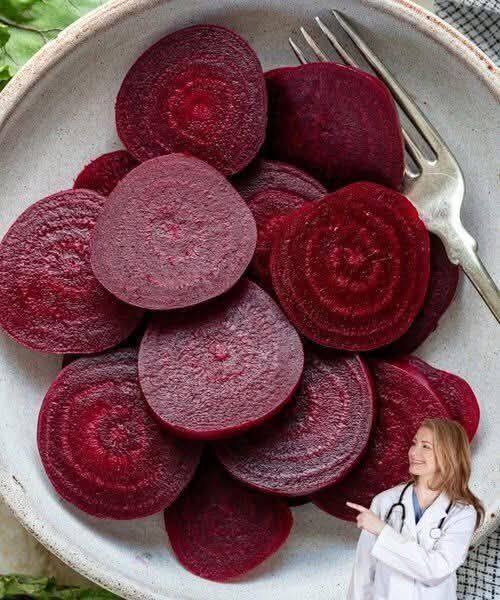
One of the most studied benefits of beets is their effect on blood flow — thanks to naturally occurring nitrates.
Here’s how it works:
- You eat beets (or drink beet juice).
- Gut bacteria convert nitrates → nitrite → nitric oxide (NO).
- Nitric oxide relaxes the inner lining of blood vessels (endothelium), helping them dilate.
✅ This process can lead to:
- Mild reduction in blood pressure (systolic drops of 4–10 mmHg in clinical trials)
- Improved oxygen delivery during physical activity
- Better blood flow to the brain and muscles
🧠 A 2017 study published in Hypertension found that drinking one glass of beet juice daily led to measurable improvements in vascular function within hours.
💡 Important: Effects are modest and temporary — lasting 6–12 hours — so regular intake matters.
Many athletes use beet juice before endurance events — and there’s reason why.
Studies show:
Cyclists who drank beet juice before a ride used less oxygen and lasted longer
Older adults walked farther during exercise tests after consuming nitratesµ
Brain blood flow increased during mental tasks in older adults (per NIH research)
But here’s the truth:
Beets don’t give you an adrenaline rush.
They help your body use oxygen more efficiently — which can mean:
Less fatigue during walks or chores
Slightly better stamina over time
Feeling like daily movement takes less effort
✅ Think of it as fine-tuning your engine — not revving it.
🌿 Gentle Digestive Support
Beets are rich in fiber and betaine, both of which support digestive comfort:
|
Benefit
|
How It Works
|
|---|---|
|
✅ Promotes regular bowel movements
|
Fiber adds bulk and softness to stool
|
|
✅ Feeds beneficial gut bacteria
|
Acts as a prebiotic — supporting microbiome balance
|
|
✅ May reduce bloating (for some)
|
Betaine supports liver detox pathways involved in digestion
|
🍽️ Best when eaten cooked — raw beets can be hard to digest for sensitive stomachs.
⚠️ Side note: That pink urine? Beeturia — harmless and affects ~10–15% of people.
