
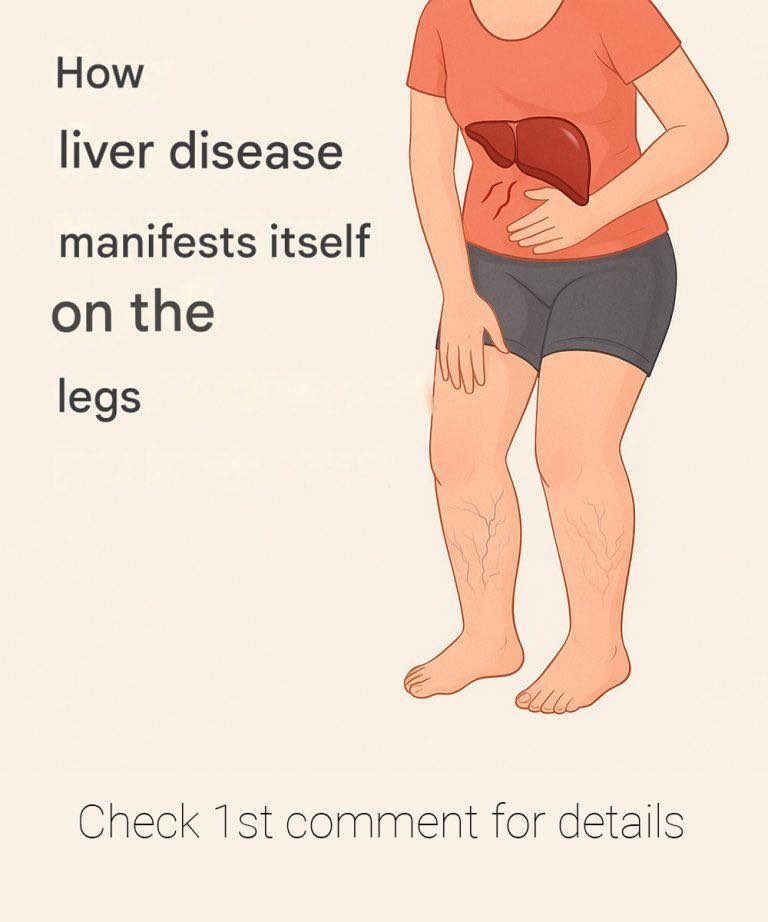
While leg changes are notable, watch for these too:
|
Symptom
|
Meaning
|
|---|---|
|
✅ Yellowing of skin/eyes (jaundice)
|
Bilirubin buildup
|
|
✅ Abdominal swelling (ascites)
|
Fluid accumulation in belly
|
|
✅ Dark urine / pale stools
|
Liver or bile duct issue
|
|
✅ Fatigue, confusion, brain fog
|
Toxins building up (possible hepatic encephalopathy)
|
🩺 If multiple signs are present, see a doctor promptly.
✅ Who Should Be Screened?
You're at higher risk if you:
- Have type 2 diabetes or obesity (risk for NAFLD)
- Drink heavily over time
- Had hepatitis B/C exposure
- Use medications long-term that affect the liver
- Have family history of liver disease
🩸 Simple blood tests (liver function panel) and ultrasound can detect problems early.
❌ Debunking the Myths
|
Myth
|
Truth
|
|---|---|
|
❌ “Only alcoholics get liver disease”
|
False — NAFLD affects ~25% of people globally, mostly non-drinkers
|
|
❌ “If my liver hurts, it’s failing”
|
The liver has no pain nerves — damage occurs silently
|
|
❌ “I’d know if something was wrong”
|
Many live with liver disease for years without symptoms
|
|
❌ “Detox teas clean your liver”
|
No — only proven ways are lifestyle change and medical treatment
|
✅ What You Can Do to Protect Your Liver
|
Habit
|
Benefit
|
|---|---|
|
✅ Eat a balanced diet
|
Reduce sugar, refined carbs, and saturated fats
|
|
✅ Exercise regularly
|
Helps reverse fatty liver
|
|
✅ Limit alcohol
|
Or avoid completely if diagnosed with liver disease
|
|
✅ Avoid unnecessary supplements
|
Some herbs (e.g., kava, comfrey) harm the liver
|
|
✅ Get vaccinated
|
Hepatitis A & B vaccines are safe and effective
|
🩺 Always tell your doctor about all medications and supplements you take.
Final Thoughts
You don’t need pain to know something’s wrong.
But you do deserve to notice the quiet warnings — the puffiness, the bruises, the itch that won’t quit.
So next time you're putting on socks… pause.
