
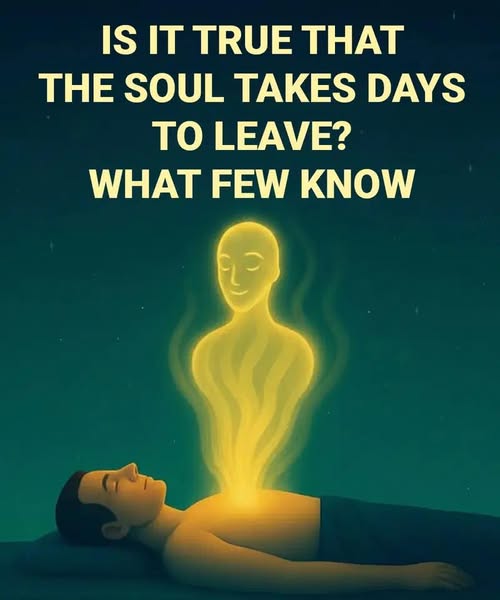
2. Brain Activity After Death
Research conducted in hospitals has detected flashes of brain activity even minutes after the heartbeat stops. This indicates that consciousness, or at least some form of perception, may persist beyond the point at which a person is considered clinically dead.
A 2023 study published in Resuscitation analyzed cases of cardiac arrest and concluded that, in some patients, a “brain signature associated with conscious perception” was recorded, suggesting that something happens in the brain that is not yet fully understood.
How does this relate to the idea of the soul?
Although science cannot confirm the existence of a “soul,” the aforementioned findings allow us to consider the possibility that consciousness does not immediately cease. This aligns, symbolically, with the belief that the soul needs time to depart.
The idea of the three days could be interpreted as a cultural or spiritual framework that expresses a real, as yet unknown, process of disconnection between the body and consciousness.
Between Faith and Science
The belief that the soul takes three days to depart is part of an ancient wisdom that attempts to make sense of what happens after death. Science, for its part, is beginning to discover that human consciousness is far more complex than previously thought, and that perhaps it doesn’t disappear instantly.
Although there are still no definitive answers, the dialogue between spirituality and science remains open. Far from contradicting each other, both paths may be observing the same phenomenon from different perspectives.
