
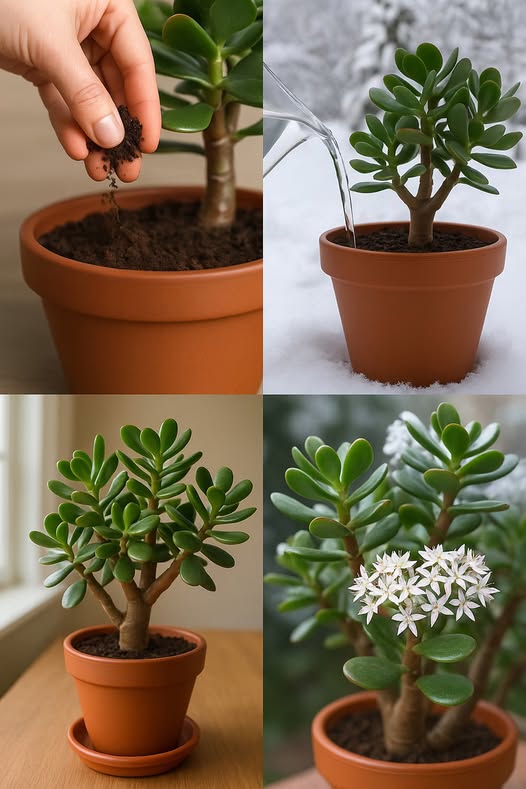
If there’s one golden rule with succulents, it’s this: less is more. The jade plant stores water in its leaves, allowing it to withstand periods of drought without difficulty.
To encourage flowering, always wait until the soil is completely dry before watering. In practice, this means very moderate watering, especially in autumn and winter. Overwatering can not only prevent flowering but also permanently weaken the plant.
Nutrition and maintenance: a welcome little boost
Although it’s not a heavy feeder, the crassula appreciates a regular supply of nutrients. Natural compost or a mild fertilizer specifically formulated for succulents, applied once a month in spring and summer, is more than sufficient. This stimulates its growth and allows it to accumulate the energy needed to flower.
Remember to dust its leaves from time to time with a slightly damp cloth. This simple action improves photosynthesis and helps keep the plant vigorous—truly beneficial long-term care for your jade tree .
Cold weather, an unexpected ally in triggering flowering
It may seem surprising, but a little exposure to cooler temperatures is often the long-awaited trigger. In autumn and early winter, placing the jade plant in a cooler room, away from drafts, helps to replicate its natural conditions. This difference in temperature between day and night encourages the formation of flower buds.
There’s no need to aim for extreme conditions: an unheated room or one slightly cooler than the living room is sufficient, provided the plant remains bright and protected from frost.
With a little patience, gentleness and these simple gestures integrated into your routine, the jade tree can transform your interior by offering, on a winter day, a bloom as discreet as it is precious.
