
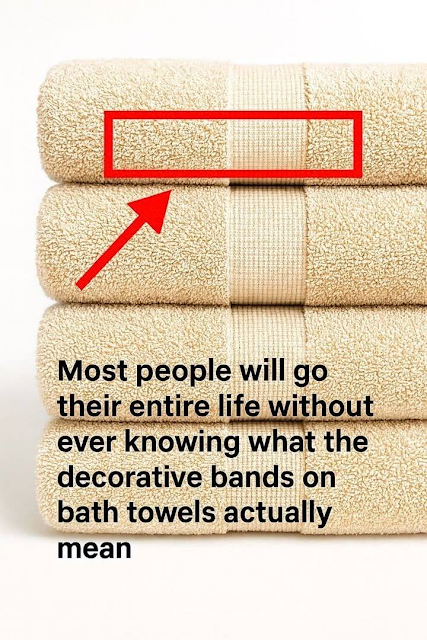
Without reinforcement, towels made entirely of looped cotton fibers may stretch unevenly over time. The dobby border acts as a stabilizing strip that keeps the towel balanced.
When a towel is hung on a rack or folded, the band helps distribute tension evenly across the fabric.
This small design feature contributes to the overall longevity of the towel.
4. Improving Folding and Storage
Although it might not be obvious at first, the decorative band also makes towels easier to fold neatly.
The flat woven section creates a visual and physical guide that helps people align the edges when folding.
This is why many hotels and spas use towels with clearly defined dobby borders.
The band allows staff to fold towels quickly and consistently, creating the crisp presentation often seen in hospitality settings.
5. Enhancing Aesthetic Appeal
Of course, the decorative band does serve an aesthetic purpose as well.
Designers use the dobby border to add visual interest to otherwise plain towels. The band may feature:
Subtle geometric patterns
Raised textures
Contrasting thread colors
Elegant woven stripes
These design details allow towels to match bathroom décor while still maintaining their functional benefits.
6. Identifying Towel Orientation
Another practical benefit of the decorative band is helping people quickly determine the orientation of the towel.
When grabbing a towel from a rack or shelf, the band provides a visual cue indicating the ends of the towel.
This small feature helps users spread the towel correctly when drying off or hanging it back on a hook.
In busy households or shared spaces, this simple visual guide can make everyday routines more efficient.
7. Creating Space for Branding
Many towel manufacturers use the dobby border as a location for branding.
Logos, patterns, or subtle branding elements can be woven into this section without affecting the absorbent surface of the towel.
Hotels and resorts sometimes customize this area with their brand names to create a professional and recognizable appearance.
Because the border is flat and tightly woven, it holds patterns and text more clearly than the fluffy looped fabric.
How Towels Are Made
To fully understand why dobby borders exist, it helps to know how towels are manufactured.
Most bath towels are made using terry cloth, a fabric that contains loops of cotton thread designed to absorb moisture.
These loops increase the surface area of the fabric, allowing towels to soak up water efficiently.
However, looped fabric is more flexible and less stable than tightly woven cloth. Without reinforcement, towels made entirely of loops could stretch or wear unevenly.
By adding a dobby border, manufacturers strengthen key sections of the towel while keeping the rest of the fabric soft and absorbent.
The Role of Cotton in Towel Quality
High-quality towels are usually made from cotton because of its natural absorbency and softness.
Certain types of cotton fibers are especially valued in towel production.
Examples include:
Long-staple cotton
Egyptian cotton
Turkish cotton
These cotton varieties produce stronger and more durable threads, which enhance towel performance.
The dobby border complements these materials by adding structural stability.
Why Hotels Prefer Towels With Decorative Bands
Luxury hotels often choose towels with dobby borders for both practical and visual reasons.
First, the reinforced edges help the towels withstand frequent industrial laundering.
Hotel towels may be washed hundreds of times during their lifespan, so durability is essential.
Second, the bands create a refined appearance that aligns with hospitality design standards.
Neatly folded towels with decorative borders look more organized and appealing to guests.
How to Care for Towels Properly
To maintain the performance and longevity of towels, proper care is important.
Experts recommend several basic practices.
Wash Towels Regularly
Frequent washing removes moisture, bacteria, and residue that can affect absorbency.
Avoid Too Much Fabric Softener
Fabric softeners can coat cotton fibers and reduce absorbency over time.
Use Moderate Heat
Excessive dryer heat may weaken fibers and shorten towel lifespan.
Shake Towels Before Drying
Shaking towels after washing helps separate the fibers, allowing them to dry more evenly.
Following these simple steps helps keep towels soft and effective.
Fun Fact: Towel Design Has Evolved Over Time
Towels have been used for centuries, but their modern design has evolved with advancements in textile technology.
Ancient towels were often simple woven cloths used primarily for drying.
As textile machinery improved during the industrial revolution, new weaving techniques allowed manufacturers to create looped fabrics like terry cloth.
This innovation greatly improved absorbency and comfort.
