
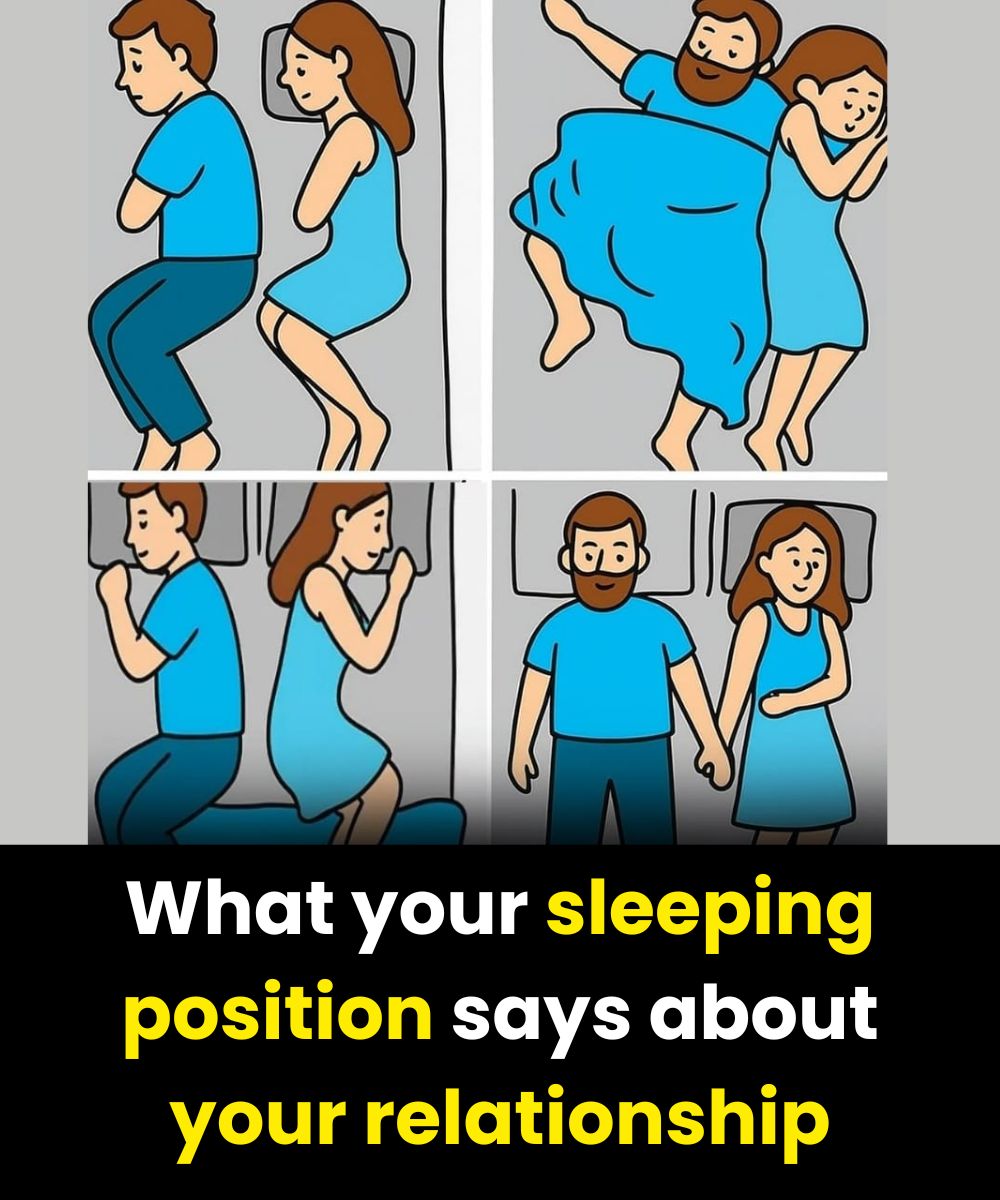
Partners who sleep this way usually value affection and honesty. It’s common in the early, passionate phases of love or during periods of emotional reconnection.
Over time, many couples naturally move away from this posture as they seek more restful sleep. That shift doesn’t mean the relationship has weakened—it often means it has matured into a comfortable, trusting phase.
3. The “Back-to-Back but Touching” Position
When partners lie back-to-back but still touch—perhaps at the lower back or with their feet—it suggests balance: closeness with freedom.
This body language says, “We’re connected, but we also respect each other’s space.”
It’s a common position for long-term couples who are emotionally secure and comfortable as individuals. This quiet form of intimacy reflects deep trust—love that doesn’t need constant physical closeness to feel strong.
4. The “Back-to-Back and Apart” Position
Facing opposite directions without touching doesn’t always hint at trouble.
For many couples, it’s simply about comfort and personal space—especially when the emotional connection remains strong.
However, if this position replaces previously affectionate sleeping habits, it could point to growing emotional distance or unspoken stress.
In that case, it may be worth talking—not about posture, but about feelings.

What Experts Say
Relationship psychologists emphasize that no single sleeping style defines a couple. Instead, these positions act as gentle clues—a reflection of how safe, relaxed, or emotionally aligned two people feel together.
Our sleeping body language mirrors our inner state: when tension builds, distance grows; when love and trust flow, closeness follows naturally—even in sleep.
Final Thoughts:
Your sleeping position might not tell the whole story of your relationship, but it does whisper subtle truths.
It’s about comfort, connection, and how two hearts share space when everything else fades into quiet.
