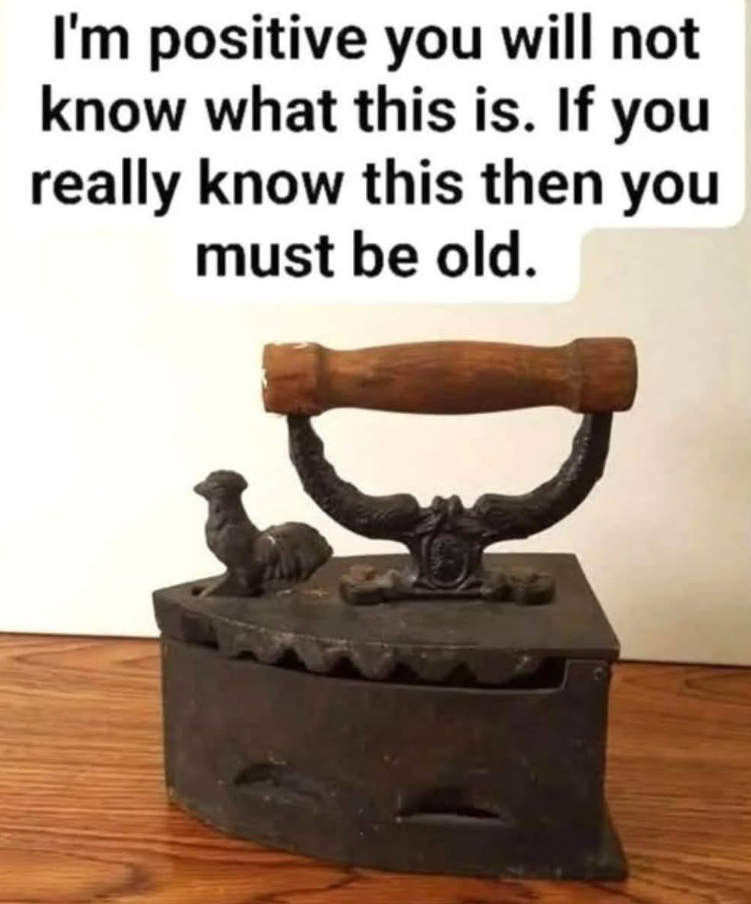
Long before the hum of an electric iron, the charcoal box iron—also known as a coal iron or self-heating iron—was a marvel of 19th-century ingenuity. Used in homes and laundries across Europe, America, and beyond, this cast-iron workhorse brought order to wrinkled linens without a single wire or outlet.
Unlike the heavy, constantly reheated “sad irons” that came before it, the charcoal box iron generated its own steady heat—thanks to glowing embers placed inside the iron itself. It was portable, practical, and surprisingly efficient for its time.
Let’s take a closer look at this fascinating piece of domestic history—and how it turned fire into crisp collars and smooth sheets.
🔥 Key Features of the Charcoal Box Iron
1. Cast-Iron Body with Internal Cavity
The iron wasn’t solid—it was a hollow box designed to hold hot charcoal. This allowed heat to radiate from within, keeping the soleplate hot far longer than solid irons.
2. Hinged Lid with Decorative Latch
Often shaped like a rooster, bird, or floral motif, the latch wasn’t just pretty—it was functional. The lid could be opened to add fresh coals or remove ash without setting the whole iron down.
🐓 Fun fact: The rooster—a symbol of vigilance and domestic order—was a popular motif, reflecting the iron’s role in maintaining a tidy household.
3. Wooden Handle
Made from beech, oak, or other dense wood, the handle stayed cool because wood is a poor conductor of heat. This allowed users to iron for extended periods without burning their hands.
4. Air Vents & Scalloped Edges
Slots along the sides and decorative cutouts weren’t just ornamental—they allowed oxygen to flow, keeping the charcoal glowing steadily rather than smoldering out.
5. Heavy, Smooth Soleplate
🔥 How It Was Used: A Delicate Dance with Fire
⬇️To learn more, continue on the next page⬇️