
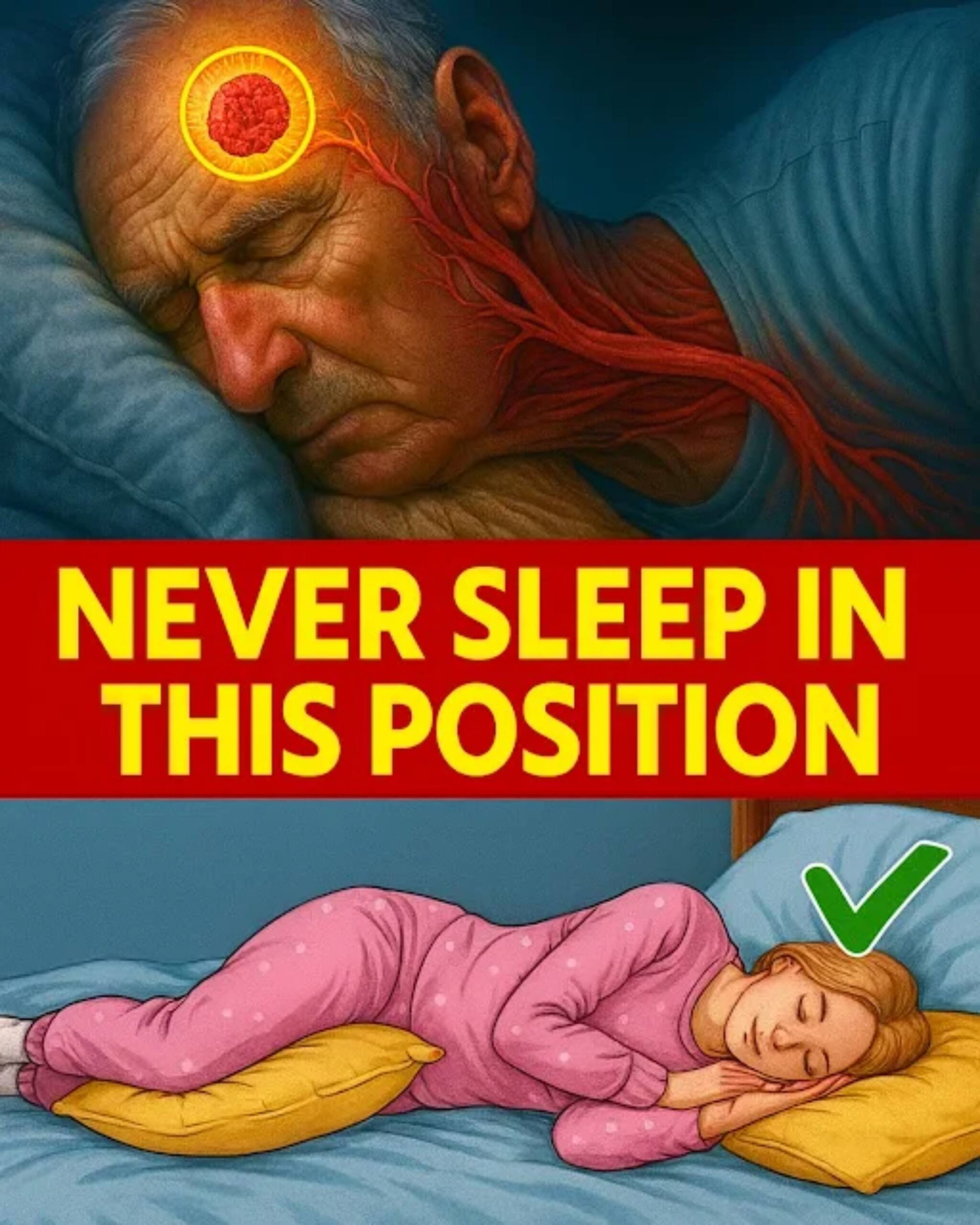
Impaired Cerebral Venous Drainage: Lying flat can hinder the return of deoxygenated blood from the brain, potentially increasing intracranial pressure over time—a concern for those with vascular fragility.
The Blood Pressure Paradox: For some with certain forms of orthostatic hypertension, back sleeping can lead to higher nocturnal blood pressure compared to side sleeping.
Who Is Most at Risk?
This position is especially dangerous for seniors with:
Pre-existing atherosclerosis (plaque buildup in neck arteries)
Diagnosed or undiagnosed sleep apnea
Hypertension or diabetes (which damage blood vessels)
A history of neck arthritis or cervical spine issues
The Safer Alternative: The Left-Side Sleeping Advantage
Why Side Sleeping, Particularly on the Left, Is Recommended:
Optimal Arterial Alignment: Side sleeping with the neck in a neutral, spine-aligned position (ear in line with shoulder) minimizes stress on the carotid and vertebral arteries, promoting steady blood flow.
Enhanced Lymphatic and Waste Clearance: Groundbreaking research suggests the brain's glymphatic system—which clears metabolic waste like beta-amyloid (linked to dementia and stroke risk)—is most active during side sleep.
Sleep Apnea Mitigation: Side sleeping significantly reduces apnea events and snoring compared to back sleeping. For some, it can reduce the Apnea-Hypopnea Index (AHI) by 50% or more.
Left-Side Specific Benefits: Sleeping on the left side may improve blood return to the heart due to anatomical positioning, easing cardiac workload. It also helps reduce acid reflux, which can disrupt sleep and increase nocturnal stress.
Actionable Strategy: How to Safely Transition to a Healthier Sleep Posture
Step 1: Optimize Your Pillow
Your pillow should maintain a neutral neck alignment. When lying on your side:
Your head should be level with your spine.
Your chin should not be tucked toward your chest or pushed upward.
Consider a contoured memory foam pillow or an adjustable shredded latex pillow designed for side sleepers.
Step 2: Use the "Pillow Barrier" Method
