
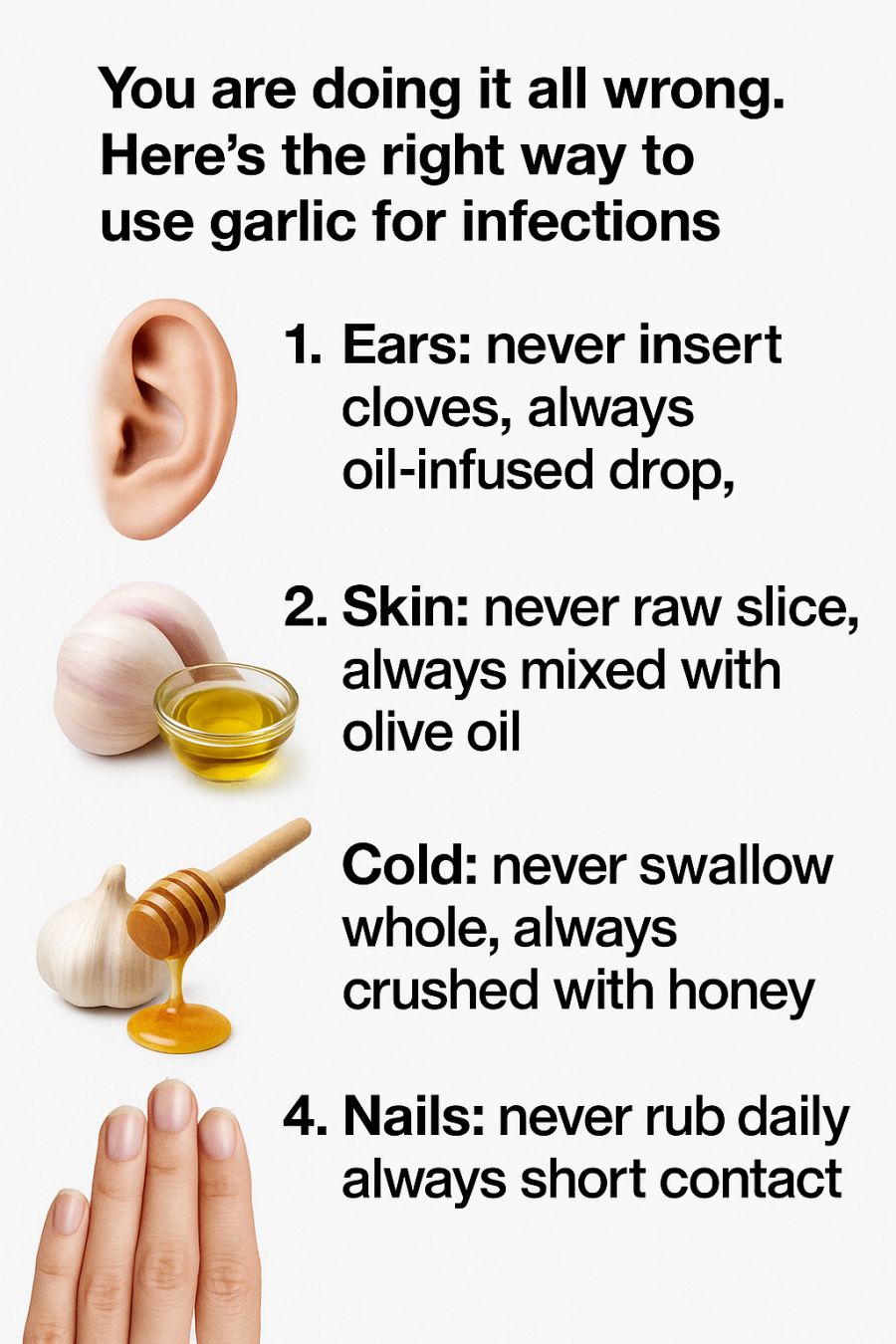
Garlic has long been hailed for its medicinal properties, especially in treating infections. This pungent bulb is not only a kitchen staple but also a powerhouse of antimicrobial compounds. However, its effectiveness largely depends on how it is used. Missteps in garlic application can lead to ineffective results or even exacerbate the problem.
In this article, we will explore the common errors people make when using garlic for infections and provide guidance on the correct methods to harness its full potential. From understanding its antimicrobial properties to safely applying it for various health issues, we aim to equip you with the knowledge you need to effectively and safely use garlic.
1. Understanding Garlic’s Antimicrobial Properties
Garlic contains a compound called allicin, which is released when the garlic is crushed or chopped. Allicin is known for its antibacterial, antiviral, and antifungal properties. Studies have shown that allicin can inhibit the growth of various harmful bacteria, such as Escherichia coli and Staphylococcus aureus. To maximize the production of allicin, it is recommended to let crushed garlic sit for about 10 minutes before use.
Furthermore, the concentration of allicin is crucial. A single clove of garlic typically contains around 5 mg of allicin per gram. Using raw, fresh garlic is key, as cooking can significantly reduce its antimicrobial potency. Understanding these properties allows us to apply garlic more effectively as a natural remedy.
2. Common Mistakes in Using Garlic for Infections
One of the most common mistakes people make is using garlic incorrectly or in inappropriate amounts. Some individuals might assume that more garlic equates to better results, which can lead to skin irritation or burns. Others might not prepare the garlic properly, such as not crushing it to activate the allicin. Additionally, applying garlic directly to sensitive areas without proper dilution can cause more harm than good.
Another mistake is using old garlic that has lost its potency. Freshness is crucial, as aged or improperly stored garlic loses its allicin content and thus its effectiveness. Ensuring the garlic is fresh and properly prepared is essential for its antimicrobial benefits.
3. Why You Should Never Insert Garlic Cloves in Ears
Inserting garlic cloves directly into the ears is a misguided practice that can cause more harm than healing. The ear canal is sensitive, and garlic's strong compounds can cause irritation or burns. Additionally, inserting garlic can push earwax further into the ear, potentially leading to blockages or infections.
Many people mistakenly believe that placing whole cloves in the ear will treat ear infections, but this method lacks scientific backing and can be dangerous. It’s essential to avoid this practice and seek safer alternatives for treating ear infections.
4. The Safe Way: Garlic-Infused Oil for Ear Infections
A safer and more effective method is to use garlic-infused oil. To prepare this, crush two cloves of fresh garlic and let them sit for 10 minutes. Then, gently heat them in two tablespoons of olive oil for a few minutes, ensuring the garlic does not burn. After cooling, strain the oil to remove the garlic solids.
This oil can be used by placing a few drops in the affected ear. The antimicrobial properties of garlic, combined with the soothing nature of olive oil, provide a gentle treatment for ear infections. Always test a small amount on the skin before use to ensure there is no allergic reaction.
