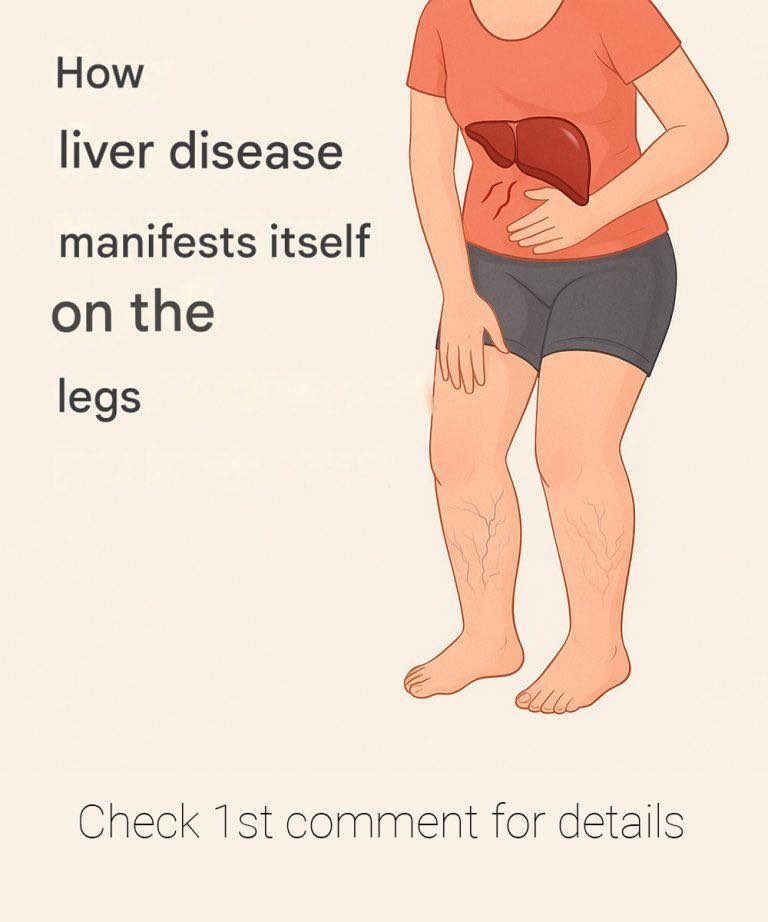
1. Swollen Ankles and Legs (Edema)
One of the most common early signs.
🩺 Why it happens:
- Low albumin levels → fluid leaks into tissues
- Increased pressure in the portal vein (portal hypertension) → backs up fluid into legs
📌 Often worse at the end of the day; improves with elevation.
🚨 Not exclusive to liver disease — also seen in heart/kidney issues — but should never be ignored.
2. Easy Bruising or Bleeding
Notice bruises appearing without injury? Nosebleeds or bleeding gums?
🩺 Why it happens:
- The liver produces clotting factors — damaged liver = poor clotting
- Platelet count drops due to spleen enlargement (common in cirrhosis)
💡 Even minor scrapes may bleed longer than usual.
3. Muscle Wasting (Thinning Calves & Arms)
Legs appear thin, weak, or "shrunken" despite no weight loss effort.
🩺 Why it happens:
- Impaired protein synthesis → muscle breakdown exceeds repair
- Malnutrition or reduced appetite in chronic liver disease
📉 This is different from fat loss — it's loss of lean muscle mass, linked to poorer outcomes.
4. Itchy Skin (Pruritus), Especially on Lower Legs
Persistent itching without rash — often worse at night.
🩺 Why it happens:
Buildup of bile salts in the bloodstream (cholestasis) → deposits in skin
Common in primary biliary cholangitis or blocked bile ducts
🧴 Moisturizers rarely help — requires treating the underlying cause.
5. Slow-Healing Sores or Skin Infections
Cuts, insect bites, or ulcers take weeks to heal — or get infected easily.
🩺 Why it happens:
Poor circulation and weakened immunity in advanced liver disease
High blood sugar (liver helps regulate glucose) → increases infection risk
⚠️ Diabetic patients with liver issues are especially vulnerable.
🧪 Other Possible Symptoms of Liver Trouble
