
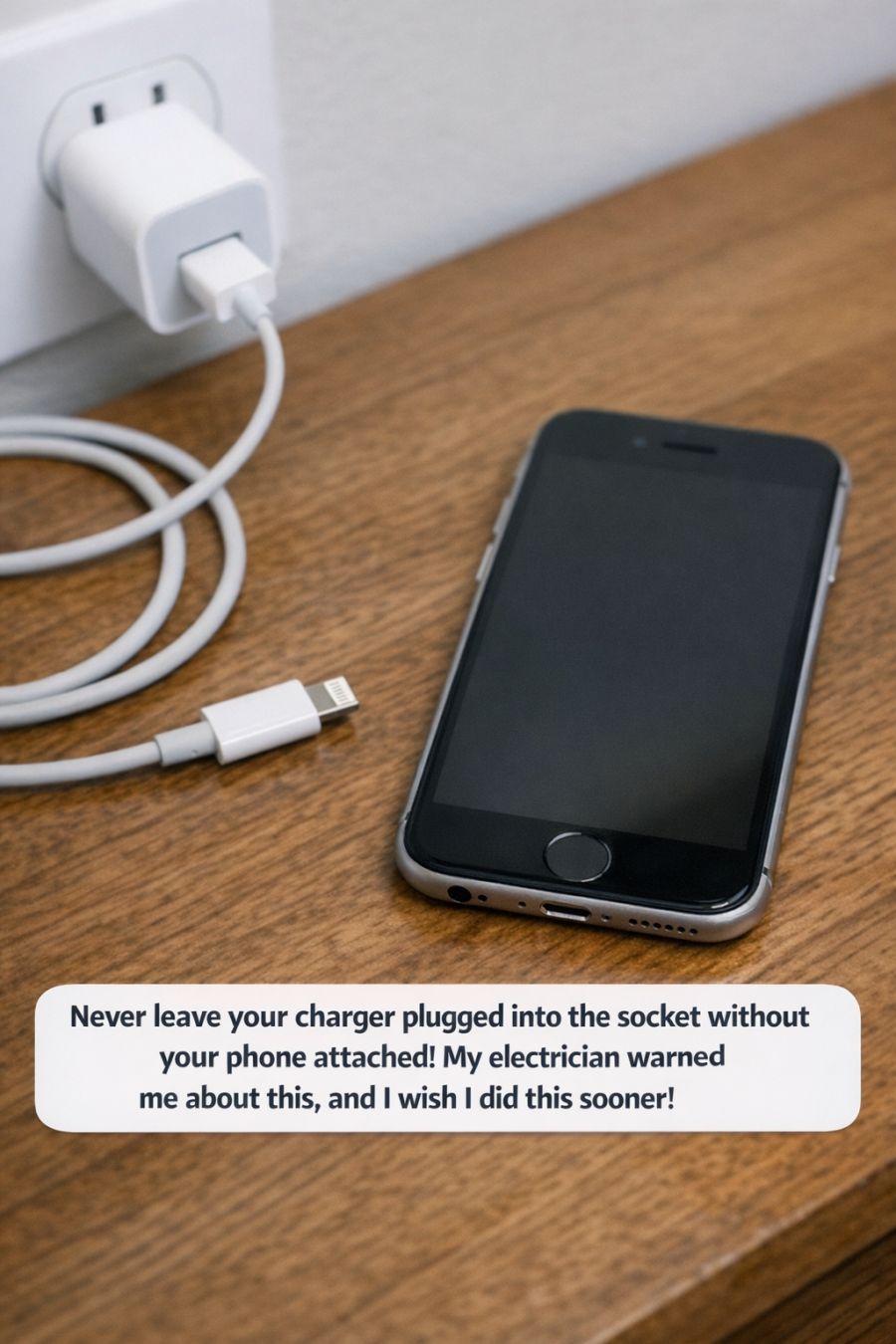
2. How Idle Chargers Waste Power All Day
Idle chargers are sneaky power consumers. While the amount of power they draw may be minimal, it adds up significantly over time. For example, a single idle charger can waste up to 2.28 kWh of electricity over the course of a year. Multiply that by the number of devices in a household, the wasted energy can amount to a significant portion of your electricity bill.
This wasted energy is also known as standby power, and it’s responsible for about 5-10% of household electricity use, according to the U.S. Department of Energy. By simply unplugging chargers when they’re not in use, you can reduce your household’s overall energy use and contribute to a more sustainable environment.
3. The Hidden Fire Hazard Lurking in Plugged-In Chargers
Leaving chargers plugged in can increase the risk of electrical fires, a fact often highlighted by safety experts. Over time, the constant flow of current can cause the charger’s insulation and internal components to deteriorate, making them susceptible to overheating. This is especially true for chargers that are left plugged in for extended periods of time or those that are poorly ventilated.
Statistics from the National Fire Protection Association indicate that electrical distribution and lighting equipment are involved in approximately 10% of home fires. While chargers are not the primary culprits, they do contribute to the risk, especially if they are of poor quality or damaged. By unplugging chargers when not in use, you can minimize this potential hazard and ensure the safety of your home.
4. Why Cheap or Worn-Out Chargers Are Especially Dangerous
Cheap chargers, often purchased from unverified manufacturers, pose significant risks. They may not comply with important safety standards, increasing the likelihood of overheating and electrical fires. Additionally, the components used in these chargers are often inferior, leading to rapid wear and tear.
Worn-out chargers are just as dangerous. Over time, the insulation can fray and internal wires can become exposed, increasing the risk of short circuits. Regularly inspecting your chargers for signs of wear and tear and replacing them with certified, high-quality alternatives can prevent potential accidents. Investing in a reliable charger may be more expensive up front, but can save you significant expenses and safety concerns in the long run.
5. The Silent Damage to Outlets, Cords, and Devices
Leaving chargers plugged into outlets can contribute to gradual wear and tear on your home’s outlets and cords. The constant flow of electricity through the outlet can cause heat buildup, which can potentially damage the outlet over time. This damage can manifest as loose connections or even burnt-out outlets, which can be costly to repair.
Additionally, chargers that are not plugged into an outlet can degrade the battery life of your devices. When the charger is plugged into a phone or tablet, it continuously charges the battery, leading to overcharging. This can shorten battery life, requiring more frequent replacements and contributing to e-waste.
6. How Standby Power Costs Increase Your Energy Bill
Standby power consumption, while seemingly insignificant on a daily basis, can add up to a significant increase in your energy bill over time. Studies show that standby power consumption can add up to about 100 watts per household, which equates to an additional $100-$200 in annual energy costs.
By making a conscious effort to unplug chargers and other electronic devices when they’re not in use, you can reduce your energy bill and free up money for other household expenses. Implementing energy-saving habits is not only good for your wallet, but it also helps reduce your overall energy needs and environmental impact.
7. Common myths about leaving chargers plugged in, debunked
A common myth is that chargers don’t use energy if they’re not connected to a device. As we've discussed, this is wrong because of phantom power. Another misconception is that unplugging chargers can often damage the outlet or charger. In reality, the wear and tear from plugging and unplugging is minimal compared to the potential damage from constant power flow.
Some people believe that modern chargers have built-in technology to prevent power consumption, but even though many do, they still draw power when plugged in. Understanding these myths can help you make informed decisions about your energy use and charging safety.
8. Simple Daily Habits to Stop Leaving Chargers Plugged in
Developing new habits to unplug chargers can be simple and effective. Consider placing chargers in a visible area so you remember to unplug them when not in use. Setting reminders on your phone or leaving a note near your outlets can also help reinforce this habit.
