
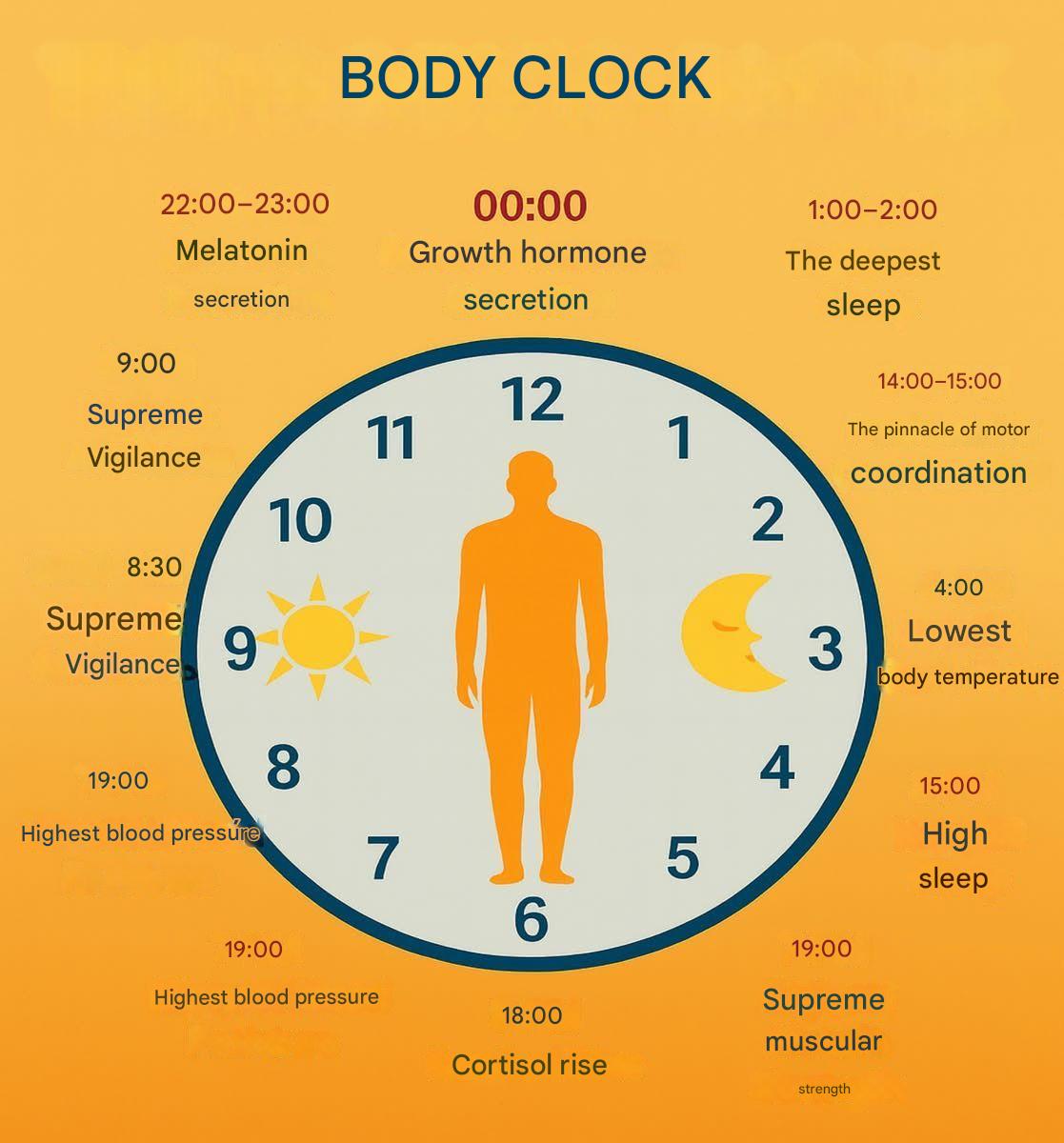
Core body temperature reaches a minimum
Metabolism slows down
Why it’s important:
This phase helps reset your circadian rhythm
Disrupting it can worsen sleep quality
👉 Waking up too early can disrupt natural regeneration.
🕣 08:30–09:00: Beginning of peak alertness
What happens:
Cortisol promotes wakefulness
Mental clarity and focus increase
Why it’s important:
Ideal time for planning, studying, and problem-solving
Improves reaction speed
👉 Great time for demanding mental tasks.
🕘 09:00: Peak of mental alertness
What happens:
Brain power is high
Concentration and memory are sharpest
👉 Ideal time for meetings, learning and decision-making.
🕑 14:00–15:00: Peak of motor coordination
What happens:
Reaction time improves
Coordination and accuracy reach their maximum
Why it's important:
Suitable for skill tasks
Sports, driving and technical work are more efficient
👉 Excellent time for activities requiring precision.
🕒 3:00 PM: Afternoon slump after lunch
What’s happening:
Natural decline in alertness
Energy drops slightly
Why it’s important:
A short break or light exercise helps restore focus
👉 Avoid heavy meals to reduce fatigue.
🕕 6:00 PM: Slight rise in cortisol and energy
What’s happening:
Cortisol rises slightly
Physical energy improves
👉 Good time for light exercise or active hobbies.
🕖 7:00 PM: Peak physical performance
Around 7:00 PM, several bodily functions reach their maximum:
✔ Highest blood pressure
✔ Highest muscle strength
Why it’s important:
Best time for strength training
Muscles respond most effectively to stress
👉 Avoid exercising too intensely late at night to prevent sleep disruption.
⏰ Why your body clock matters
Circadian disruption can lead to:
