
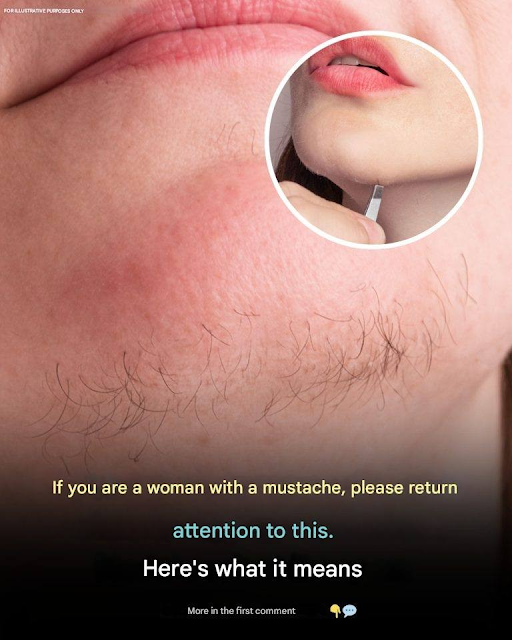
What Chin Hair in Women Can Really Mean: Hormones, Health, Aging, and Common Myths
Few topics create more confusion, embarrassment, and misinformation online than facial hair in women. Viral headlines often claim things like:
“A woman’s chin hair is a sign of something shocking…”
or
“If you notice chin hair, your body is trying to warn you…”
These dramatic statements spread quickly because they trigger curiosity and insecurity at the same time. But the truth is far more nuanced—and much less sensational.
Chin hair in women is actually very common. In many cases, it is completely normal and linked to natural hormonal changes, aging, genetics, or ethnicity. In other situations, it can be associated with underlying hormonal conditions that may deserve medical attention.
Understanding the difference between normal variation and potential warning signs is important—not only for health reasons, but also for reducing unnecessary fear and stigma.
Here’s what women’s chin hair can really mean, according to medical understanding and common biological factors.
Why Women Naturally Have Facial Hair
One of the biggest misconceptions is the belief that women are not supposed to grow facial hair at all.
In reality, nearly all women have facial hair to some degree.
Most facial hair in women appears as:
Fine peach fuzz
Light upper-lip hair
Small chin hairs
Soft sideburn growth
The visibility and thickness depend on several factors:
Hormones
Genetics
Age
Ethnic background
Hair color and texture
The difference between men and women is usually not whether facial hair exists, but how thick, dark, and widespread it becomes.
The Role of Hormones
Hormones play the biggest role in facial hair growth.
Women naturally produce small amounts of hormones called androgens, which are often associated with male traits. Testosterone is one example.
These hormones help regulate:
Bone strength
Muscle mass
Mood
Libido
Hair growth
When androgen levels increase—or when hair follicles become more sensitive to them—facial hair may become more noticeable.
This is why chin hair often appears or changes during different stages of life.
Chin Hair and Aging
One of the most common reasons women notice chin hair is aging.
As women get older, hormone levels shift naturally, especially around:
Perimenopause
Menopause
Post-menopause
During menopause, estrogen levels decline significantly. When estrogen decreases, the balance between estrogen and androgen hormones changes.
This can lead to:
