
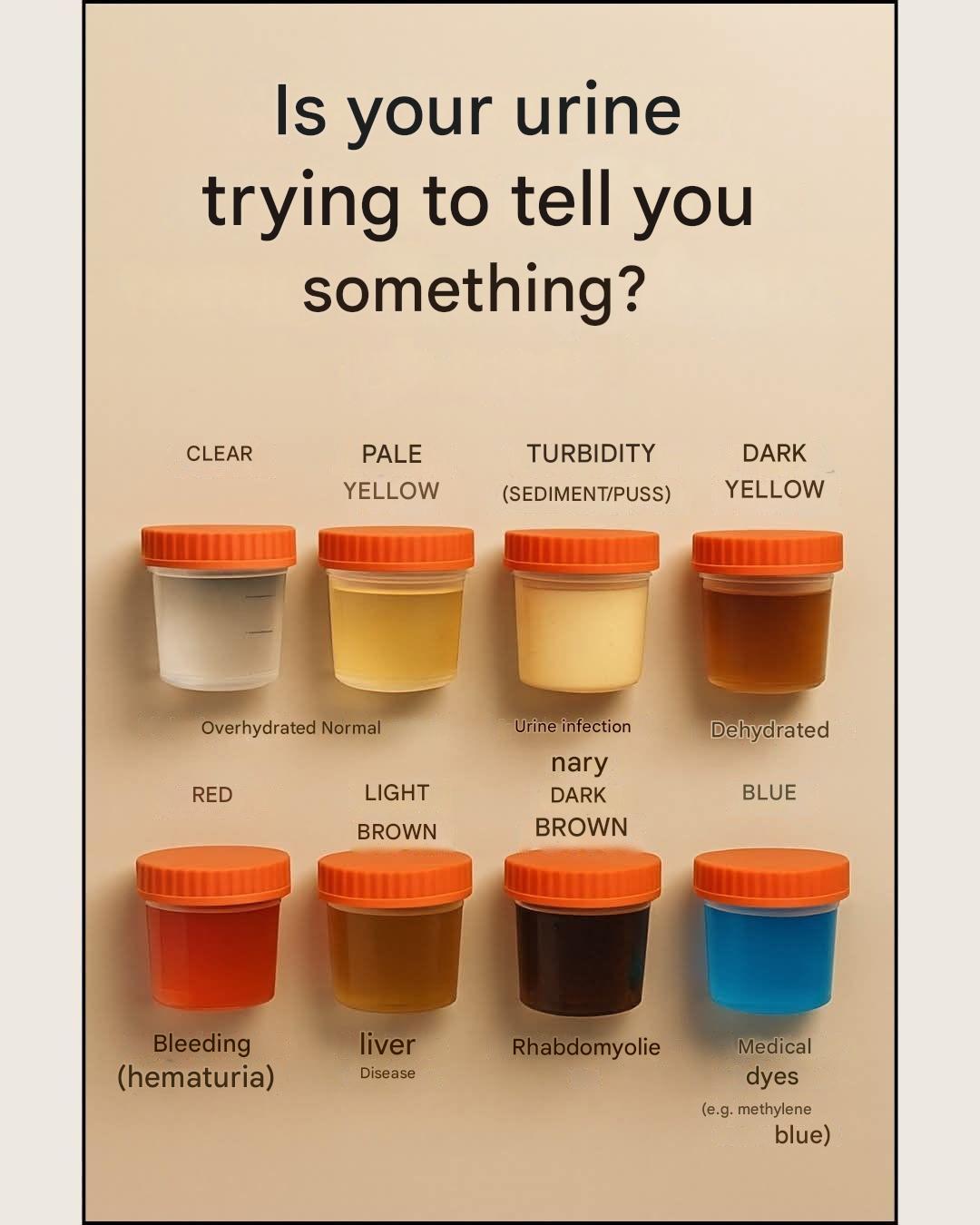
🟠 Dark yellow to amber urine
➜ Mild to moderate dehydration
Need to drink more
Urine is more concentrated
👉 Increase your water intake, especially in the heat or after physical exertion.
🟤 Brown or cola-colored
➜ Warning sign ⚠️
Severe dehydration
Possible liver problems
Presence of bilirubin or myoglobin
👉 If this condition persists, see a doctor immediately.
🔴 Pink or red urine
➜ Food or medical causes
Foods (beets, blackberries)
Presence of blood
Urinary tract infection, kidney stones
👉 A medical examination is recommended to rule out risks.
🔵 Blue or green urine
➜ Rare but possible
Food dyes
Some medications
Specific bacterial infections
👉 Monitor the development and consult a doctor if necessary.
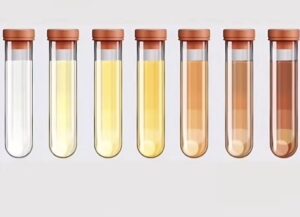
⚪ Cloudy or whitish urine
➜ Infection or excess minerals
Urinary tract infection
Presence of phosphates, pus or mucus
👉 A medical examination may be appropriate.
🧪 Foamy urine
➜ Excess protein
May indicate kidney failure
If it occurs frequently, it should be monitored
👉 If the foam persists, consult a doctor.
⚠️ When to see a doctor?
Unusual and prolonged color change
Pain, burning or fever
Presence of blood
Very dark urine despite adequate fluid intake
✅ Conclusion
The importance of the color of your urine should not be underestimated. It is a natural, simple and free self-monitoring tool that helps you monitor your health. When in doubt, it is always better to consult a professional.
💡 A sufficient drinking regimen is a basic step towards healthy kidneys.
