
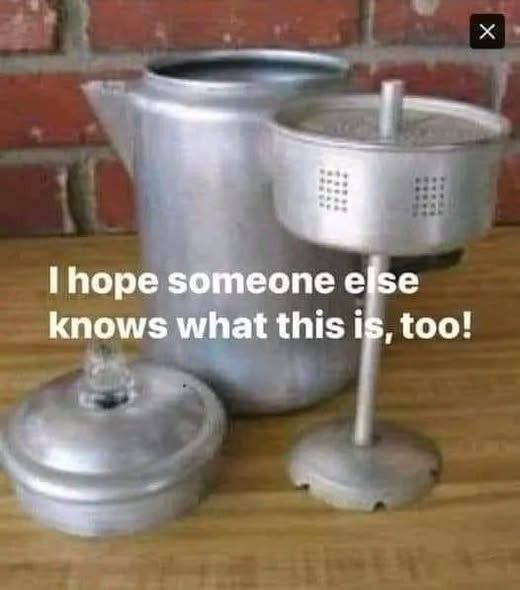
Unlike modern coffee makers, where hot water passes through the grounds once and then flows directly into the pot, the percolator works in a continuous cycle. Water at the bottom heats until it rises through the central tube, spills over the coffee grounds in the basket, and then drips back down into the pot. This process repeats again and again, gradually strengthening the brew. The main pot, the vertical tube, and the perforated basket aren’t decorative—they’re all essential parts of this looping system.
This method required attention. Brew it too long, and the coffee could become overly strong or bitter. But in practiced hands, the percolator produced a bold, aromatic cup with depth and character. Watching the color change in the glass knob wasn’t just satisfying—it was part of the craft, a visual cue passed down through experience rather than instruction manuals.
Today, the percolator feels almost ceremonial compared to the push-button convenience of modern machines. It reminds us of a time when making coffee was not rushed, when mornings began with patience, sound, and scent rather than blinking lights. That forgotten metal pot wasn’t just a coffee maker—it was a ritual, a daily pause, and a quiet moment of mastery in an otherwise ordinary kitchen.
