
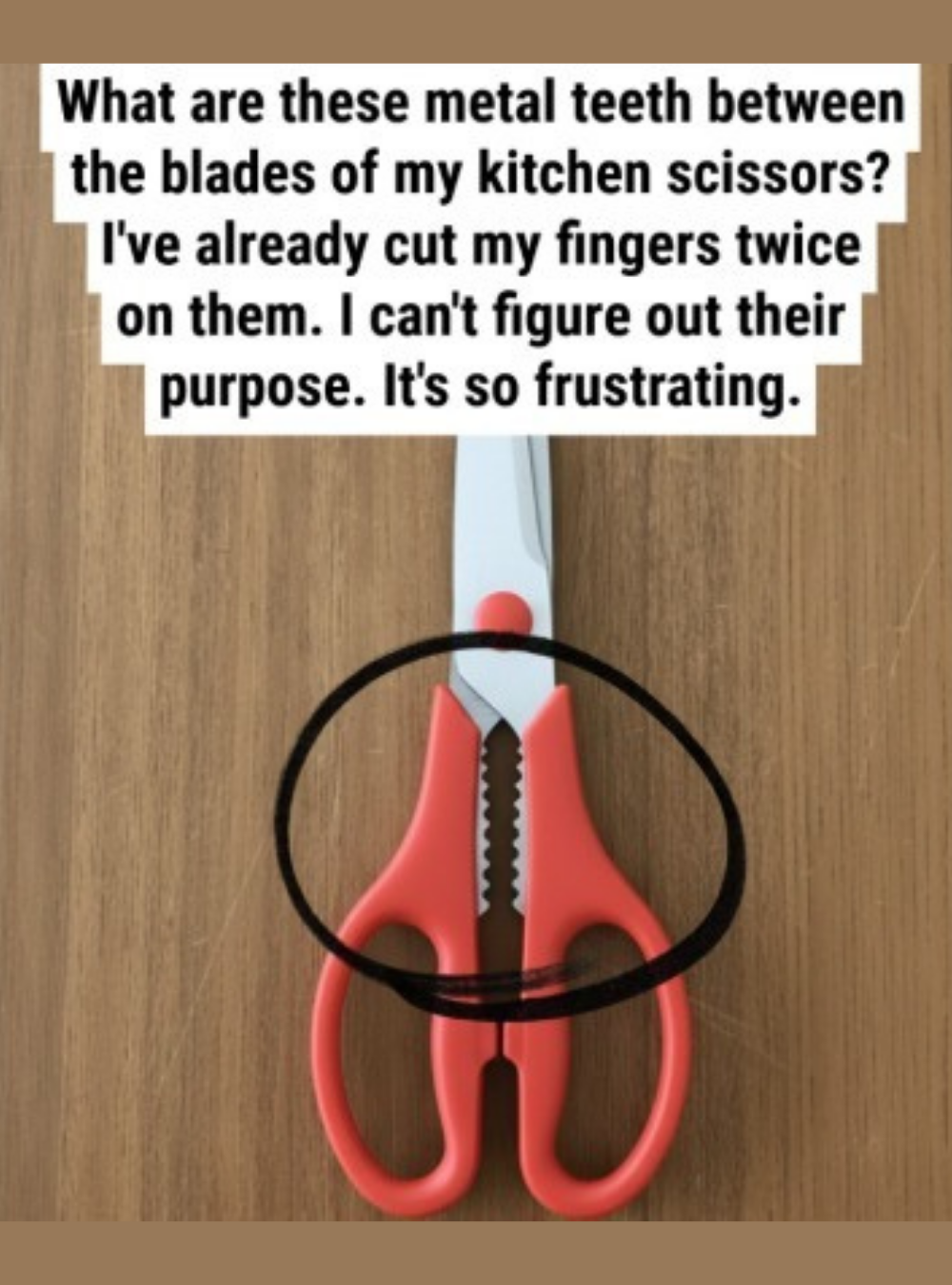
What Is It Used For?
One of its most common uses is cracking nuts or shells. The ridged grip allows you to apply steady pressure without crushing what’s inside. It’s also useful for opening stubborn jar lids, bottle caps, or sealed containers that are difficult to twist open by hand.
In food preparation, the gripper can help crack small bones, shellfish, or cartilage when cooking meat or seafood. It can also be handy for gripping hot items briefly, such as lifting a small lid or holding something steady while cutting—though care should always be taken.
Why It’s So Useful
This feature is especially helpful for people with limited hand strength or grip mobility. Instead of struggling or reaching for another tool, the scissors provide extra leverage in a compact form. It saves time, reduces frustration, and keeps your kitchen workspace simpler.
Why Most People Don’t Use It
Many people simply aren’t told what it’s for. Kitchen scissors are often purchased without instructions, and the gripper blends into the handle design. Over time, it becomes invisible—a tool hiding in plain sight.
Once you know its purpose, though, it’s hard to ignore. That small jagged section transforms ordinary kitchen scissors into a versatile helper, proving that thoughtful design often lives in the details we least expect.
