
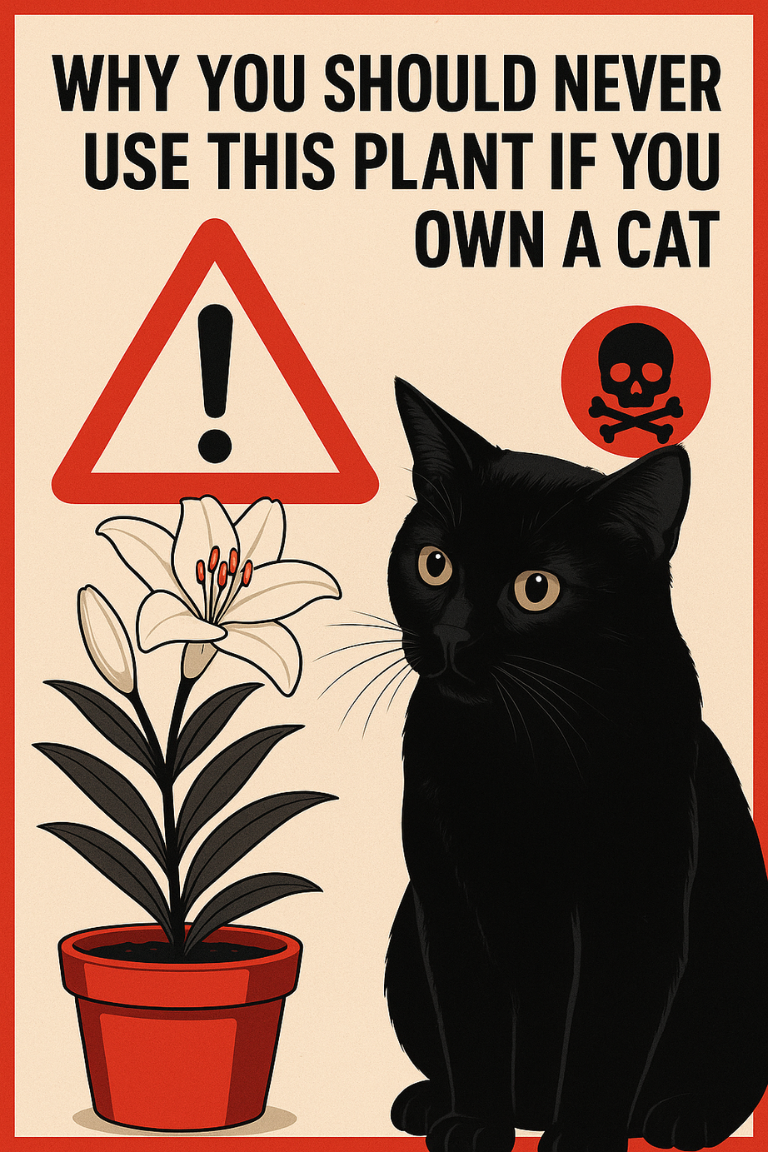
Many people enjoy decorating their homes with plants. They add color, calmness, and a sense of life to any room. But for cat owners, certain plants can be far more dangerous than they appear. One of the most common yet highly toxic plants is the lily. Although it is beautiful and often used in bouquets or indoor arrangements, it can cause life-threatening harm to a cat within a very short time.
This article explains why lilies should never be kept in homes with cats, how exposure happens, the symptoms to watch for, and safer alternatives you can choose.
1. Lilies Are Extremely Toxic to Cats
Lilies are among the most dangerous plants for cats. The entire plant is toxic, including the petals, leaves, stem, pollen, and even the water inside the vase. A cat does not need to chew a whole leaf to be poisoned. A small amount of pollen on the fur or a sip of vase water can be enough to trigger acute kidney failure within one to three days.
Veterinarians consider lily poisoning an emergency because the damage progresses quickly and can become irreversible if not treated immediately.
2. Exposure Can Happen More Easily Than You Think
Cats are naturally curious. They explore with their mouths, brush against objects, climb onto tables, and groom themselves frequently. Even if a lily is placed on a high shelf, pollen can fall onto surfaces or onto the cat’s fur. Once the cat grooms itself, the pollen is ingested without the owner ever noticing.
This is why simply keeping the plant “out of reach” is not a safe option. The only reliable protection is not bringing lilies into the home at all.
