
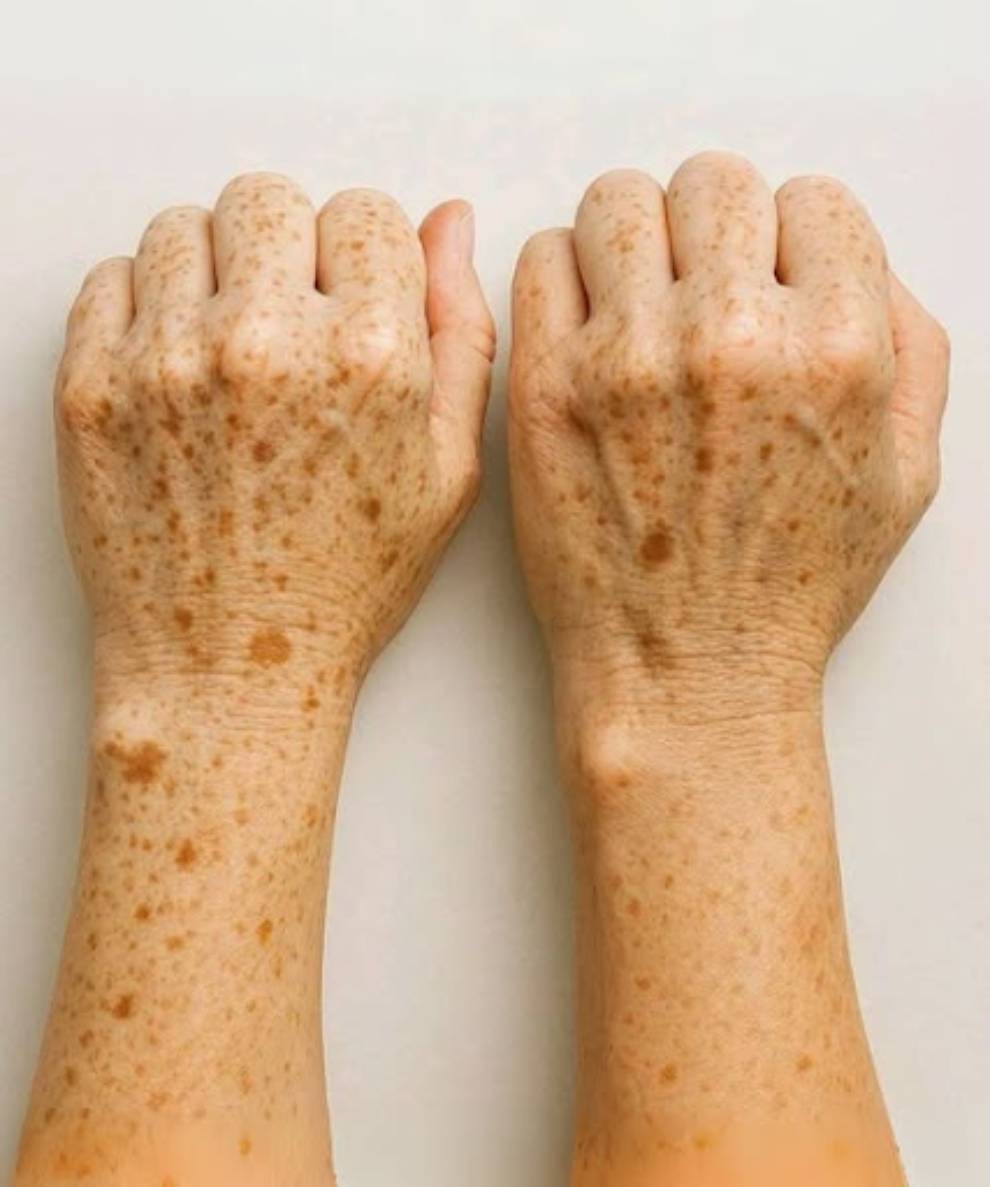
While most age spots are harmless, some changes should not be ignored. It is important to distinguish between normal pigmentation and potentially dangerous signs of skin cancer, especially melanoma. You should consult a dermatologist if you notice:
Rapid changes — the spot increases in size or darkens quickly (over weeks or months)
Irregular borders — usually the spots are smooth and clearly defined; if the edges become jagged or blurred, this is worrisome
Color variation — usually the spots are one shade; If black, red, or blue hues appear, it should be examined
Unusual texture — rough, flaky, bleeding, or raised patches are not typical
Pain or itching — usually harmless spots are symptomless, but if you experience discomfort, see a doctor
Dermatologists recommend following the “ABCDE rule”: Asymmetry, irregular borders, color variation, diameter over 6 mm, change over time. If your spot meets any of these criteria, it is advisable to consult a specialist.
Prevention and care
Even if your age spots are harmless, protecting your skin helps prevent new ones from appearing and reduces your risk of cancer. Practical measures include:
Daily use of sunscreen with SPF 30 or higher
Wearing hats and protective clothing when going outside
Avoiding tanning beds
Using moisturizing creams to keep skin healthy
If your spots are bothersome for aesthetic reasons, there are safe options. Dermatologists may recommend bleaching creams with hydroquinone, retinoids to stimulate skin renewal, or treatments like intense pulsed light.
Conclusion
Age spots are a normal part of life for many people and are a visible reminder of years spent in the sun. In most cases, they are not a cause for concern. However, paying attention to changes in their size, color, or texture is important for your health.Health
This article is for informational purposes only and is not a substitute for professional advice. If you experience any concerning changes or symptoms on your skin, always consult a dermatologist or medical professional for professional advice and diagnosis.
