
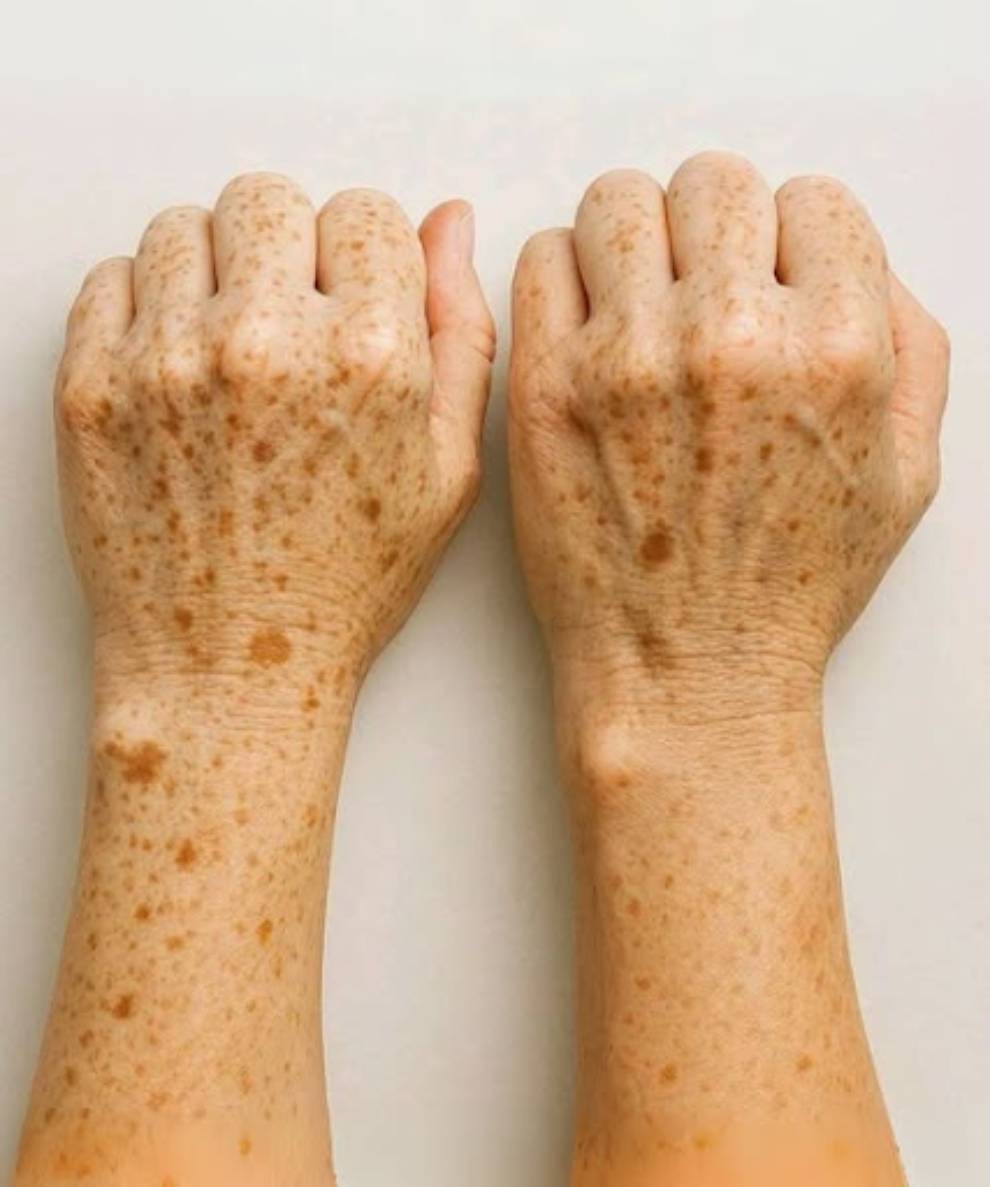
The truth about age spots: When are they normal and when should you see a doctor?
As we age, our skin naturally changes. One of the most noticeable changes, especially on sun-exposed areas like the hands, face, and shoulders, is the appearance of small brown spots, known as age spots or “liver” spots. Many people think of them as just a cosmetic problem, but sometimes these spots have a deeper meaning. It's important to know what's normal and when to seek medical attention — it's important for both your peace of mind and your health.Health
Why do age spots appear?
Age spots are flat, oval, brown or dark spots that form as a result of prolonged sun exposure. Ultraviolet (UV) rays accelerate the production of melanin, the pigment that determines skin color. Over time, this excess melanin builds up and forms visible spots. They are most common in adults over 50, but younger people who spend a lot of time in the sun or use tanning beds can also get them.
Age spots are generally harmless. They do not cause pain, itching, or discomfort. Some people prefer to live with them, while others choose treatments such as creams, chemical peels, laser therapy, or cryotherapy to reduce their appearance for cosmetic reasons.
When are they normal?
If your spots are:
Flat, smooth, uniform in color (light brown to dark brown)
Regular shape — usually oval or round
In areas exposed to the sun - face, hands, shoulders
They do not change over time.
...it's probably benign age spots. In this case, they're just a natural sign of aging and sun exposure.
When does it cause an alarm?
