
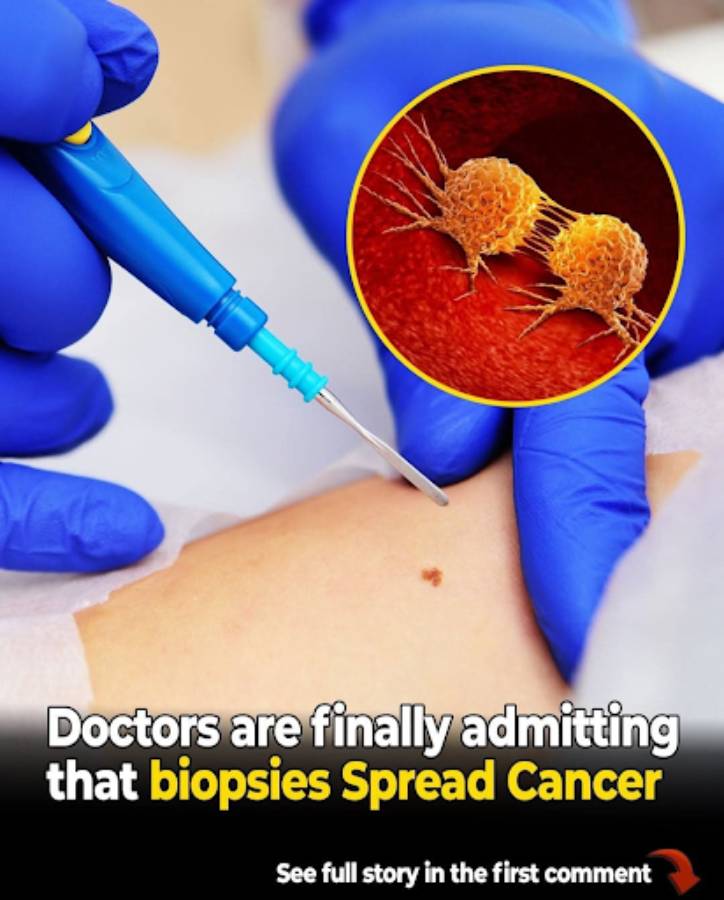
Why do we do this? Despite all the advancements in modern technology, imaging tests like CT scans, MRIs, and X-rays have a limit. They can show us that a “spot” or a “ shadow” exists, but they cannot tell us with 100% certainty what that spot is made of. It could be a benign cyst, an infection, or a malignant tumor. A biopsy provides the “gold standard” of diagnosis. It tells the medical team the exact type of cancer, how aggressive it is, and, crucially, what specific treatments, such as target therapy or immunotherapy, will work best against it.
“ Biopsies often provide essential information to help diagnose and stage cancer. They can also help inform decision-making for individuals who receive a cancer diagnosis, ” said Jeffrey E. Gershenwald, MD, FACS, an American Society of Clinical Oncology (ASCO) expert and professor in the Department of Surgical Oncology in the Division of Surgery at the University of Texas MD Anderson Cancer Center.
The Concept of “Tumor Seeding”
The technical term for what people fear is “ tumor seeding ” , sometimes called needle tract seeding. This refers to the hypothetical or rare instance where a biopsy needle, as it is withdrawn from a tumor, accidentally carries a few cancer cells along the path it traveled, depositing them into healthy tissue.
It is important to state clearly: Doctors are not “ admitting” this as if it was a dirty secret. They have been studying, documenting, and mitigating this risk for decades. Scientific literature has tracked the incidence of seeding across millions of procedures. What the research shows is that while seeding is biologically possible, it is extraordinarily rare.
Examining the Numbers: Is the Risk Real?
When we look at the data, the “danger” often cited in sensationalist articles begins to shrink. According to the American Cancer Society and various clinical studies, the incidence of needle tract seeding is so low that in many types of cancer, it is statistically negligible. For example:
