
I Found a Round, Scaly Bald Spot on My Child’s Head While Brushing Her Hair — What It Could Mean and What Parents Should Know
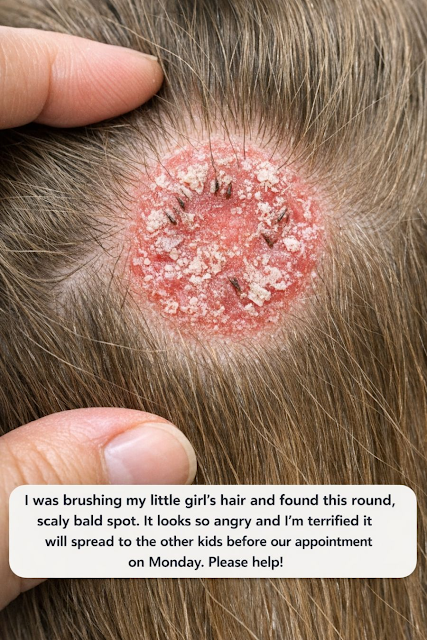
Few moments are more alarming for a parent than discovering something unusual about their child’s health. Something as simple as brushing your child’s hair can quickly turn into a moment of worry if you notice something unexpected. One parent recently described exactly that situation: while brushing her young daughter’s hair, she discovered a round, scaly bald patch on the child’s scalp. The area looked irritated and “angry,” and the immediate concern was whether it could spread to other children in the household before the upcoming doctor’s appointment.
Situations like this can feel frightening, especially when parents don’t immediately know what they’re dealing with. However, many scalp conditions that cause bald patches in children are common and treatable. Understanding what might be causing the patch, how it spreads, and what steps parents can take before seeing a doctor can help reduce anxiety and protect other family members.
This article explores the most common causes of round, scaly bald spots in children, what symptoms to watch for, and how doctors typically treat these conditions.
Why Bald Spots Appear on Children’s Scalps
Hair loss in children can occur for many different reasons. Unlike adult hair loss, which is often related to genetics or hormonal changes, hair loss in children is usually caused by infections, immune reactions, or skin conditions.
When a bald spot appears suddenly—especially if it is round and accompanied by redness or scaling—it usually suggests that something is affecting the scalp itself. In most cases, this type of patch is related to one of the following conditions:
Fungal infections
Autoimmune disorders
Skin irritation or inflammation
Hair pulling or breakage
Nutritional deficiencies (less common)
Among these possibilities, fungal scalp infections are one of the most frequent causes in young children.
A Common Cause: Scalp Ringworm
One of the most likely explanations for a round, scaly bald patch on a child’s head is a fungal infection known as Tinea capitis, often referred to as scalp ringworm.
Despite its name, ringworm is not caused by a worm. Instead, it is a fungal infection that affects the skin and hair follicles. It is especially common in children between the ages of 3 and 10.
Typical Signs of Tinea Capitis
Children with this condition often develop symptoms such as:
Round bald patches on the scalp
Red, scaly, or flaky skin in the affected area
Broken hair shafts near the scalp
Itching or tenderness
Swollen lymph nodes in the neck in some cases
The bald patch may look dry or scaly, and sometimes the hairs in the area appear broken or stubbly rather than completely gone.
Why Parents Worry About It Spreading
Parents often panic when they hear that scalp ringworm is contagious—and with good reason. Fungal infections can spread through direct contact or by sharing personal items.
Common ways it spreads include:
Sharing hairbrushes or combs
Using the same hats or helmets
Contact with infected pets
Skin-to-skin contact during play
Because children often play closely together and share items, infections can sometimes move quickly between siblings or classmates if precautions are not taken.
Other Conditions That Can Cause Bald Patches
Although fungal infections are common, they are not the only possible explanation. Doctors will usually consider several possibilities when evaluating a child with a bald spot.
Alopecia Areata
Another potential cause is Alopecia areata, an autoimmune condition where the body’s immune system mistakenly attacks hair follicles.
Unlike fungal infections, alopecia areata usually produces smooth, completely bald patches without scaling or redness. The skin often looks normal and healthy.
Hair may grow back on its own, though some children experience repeated episodes.
Scalp Psoriasis
In some cases, a scaly patch could be linked to Psoriasis, a chronic inflammatory skin condition.
Psoriasis on the scalp can cause:
Thick, scaly plaques
Red patches
Flaking skin similar to dandruff
Temporary hair thinning
However, psoriasis patches usually appear in multiple areas and may extend beyond the hairline.
Trichotillomania (Hair Pulling)
Another possibility is Trichotillomania, a condition where a child repeatedly pulls out their own hair, often due to stress or anxiety.
In these cases, the hair loss tends to look uneven, with hairs of different lengths rather than a perfectly round patch.
What Parents Should Do Before the Doctor’s Appointment
Waiting several days for a pediatric appointment can feel stressful, especially when there are other children in the home. While it’s important not to panic, there are several simple steps parents can take to reduce the risk of spreading a possible infection.
1. Avoid Sharing Hair Items
Do not allow children to share:
Brushes
Hair ties
Hats
Pillows
These items can carry fungal spores if an infection is present.
2. Wash Bedding and Towels
Wash items that touch the scalp regularly, including:
Pillowcases
Towels
Hats
Use warm or hot water if possible.
3. Keep the Area Clean
Gently wash the scalp using a mild shampoo. Avoid harsh scrubbing, which may irritate the skin further.
4. Monitor Other Children
Check siblings’ scalps for:
Small scaly patches
Broken hairs
Red or itchy areas
Early detection makes treatment much easier.
When to Seek Immediate Medical Attention
Most scalp conditions are not emergencies, but parents should seek faster medical care if the child experiences:
Severe swelling or pus
Fever
Rapidly spreading patches
Painful lesions
Significant hair loss in multiple areas
These symptoms may indicate a more severe infection or complication.
How Doctors Diagnose the Problem
During the appointment, a pediatrician or dermatologist will usually perform a careful scalp examination.
Diagnosis may include:
Visual inspection of the scalp
A skin scraping or hair sample
Laboratory testing for fungi
Examination under a special light (sometimes)
These tests help confirm whether the cause is fungal, autoimmune, or related to another condition.
Treatment Options
Treatment depends on the underlying cause.
If It’s a Fungal Infection
For tinea capitis, doctors usually prescribe:
Oral antifungal medication
Antifungal shampoo
Treatment lasting several weeks
Topical creams alone typically do not work well for scalp infections because the fungus lives deep in the hair follicles.
If It’s Alopecia Areata
Treatment may involve:
Topical corticosteroids
Observation (hair often regrows)
Dermatology follow-up
If It’s Another Condition
Doctors may recommend:
Anti-inflammatory creams
Medicated shampoos
Behavioral therapy (for hair pulling)
Will the Hair Grow Back?
One of the biggest fears parents have is permanent hair loss. Fortunately, in many childhood scalp conditions, hair regrowth is very likely once the underlying issue is treated.
For example:
Fungal infections typically allow hair to regrow after treatment
Alopecia areata often improves over time
Temporary inflammation usually resolves without scarring
Permanent hair loss is rare when treatment is started early.
Helping Children Cope Emotionally
Hair loss can be distressing for children, especially if classmates notice the bald spot. Parents can help by:
Reassuring the child that it is temporary
Avoiding blame or punishment
Using hats or hairstyles to cover the patch if the child prefers
Maintaining a calm and supportive attitude can help prevent unnecessary anxiety.
Prevention Tips for the Future
To reduce the risk of scalp infections spreading in households or schools:
Encourage children not to share brushes or hats
Regularly clean hair accessories
Check pets for skin infections
Wash bedding frequently
Teach kids basic hygiene habits
These simple precautions can help keep fungal infections from circulating among family members.
A Reassuring Final Thought
Discovering a round, scaly bald patch on a child’s scalp can be scary for any parent. It’s natural to worry about infection, spreading to siblings, or long-term hair loss.
However, the majority of these cases are treatable and temporary. Conditions like tinea capitis, alopecia areata, and other scalp disorders are well understood by pediatricians and dermatologists, and most children recover fully with proper care.
If you’ve noticed something similar on your child’s scalp, the best approach is exactly what this parent is already doing: seek medical evaluation, monitor symptoms, and take simple precautions until the appointment.
With the right diagnosis and treatment, there’s an excellent chance that both the scalp and the hair will return to normal—bringing peace of mind to the entire family.
