
4. Monitor Other Children
Check siblings’ scalps for:
Small scaly patches
Broken hairs
Red or itchy areas
Early detection makes treatment much easier.
When to Seek Immediate Medical Attention
Most scalp conditions are not emergencies, but parents should seek faster medical care if the child experiences:
Severe swelling or pus
Fever
Rapidly spreading patches
Painful lesions
Significant hair loss in multiple areas
These symptoms may indicate a more severe infection or complication.
How Doctors Diagnose the Problem
During the appointment, a pediatrician or dermatologist will usually perform a careful scalp examination.
Diagnosis may include:
Visual inspection of the scalp
A skin scraping or hair sample
Laboratory testing for fungi
Examination under a special light (sometimes)
These tests help confirm whether the cause is fungal, autoimmune, or related to another condition.
Treatment Options
Treatment depends on the underlying cause.
If It’s a Fungal Infection
For tinea capitis, doctors usually prescribe:
Oral antifungal medication
Antifungal shampoo
Treatment lasting several weeks
Topical creams alone typically do not work well for scalp infections because the fungus lives deep in the hair follicles.
If It’s Alopecia Areata
Treatment may involve:
Topical corticosteroids
Observation (hair often regrows)
Dermatology follow-up
If It’s Another Condition
Doctors may recommend:
Anti-inflammatory creams
Medicated shampoos
Behavioral therapy (for hair pulling)
Will the Hair Grow Back?
One of the biggest fears parents have is permanent hair loss. Fortunately, in many childhood scalp conditions, hair regrowth is very likely once the underlying issue is treated.
For example:
Fungal infections typically allow hair to regrow after treatment
Alopecia areata often improves over time
Temporary inflammation usually resolves without scarring
Permanent hair loss is rare when treatment is started early.
Helping Children Cope Emotionally
Hair loss can be distressing for children, especially if classmates notice the bald spot. Parents can help by:
Reassuring the child that it is temporary
Avoiding blame or punishment
Using hats or hairstyles to cover the patch if the child prefers
Maintaining a calm and supportive attitude can help prevent unnecessary anxiety.
Prevention Tips for the Future
To reduce the risk of scalp infections spreading in households or schools:
Encourage children not to share brushes or hats
Regularly clean hair accessories
Check pets for skin infections
Wash bedding frequently
Teach kids basic hygiene habits
These simple precautions can help keep fungal infections from circulating among family members.
A Reassuring Final Thought
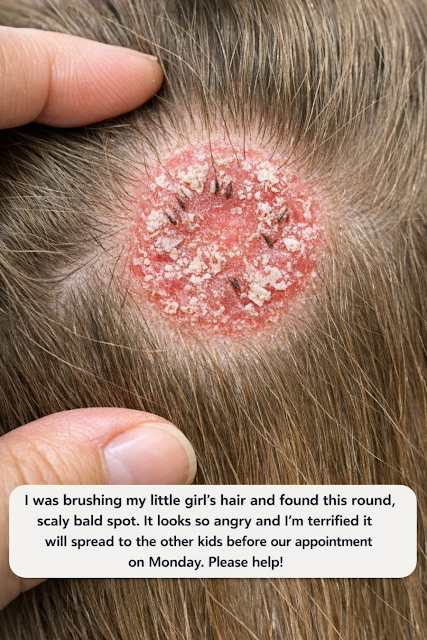
Discovering a round, scaly bald patch on a child’s scalp can be scary for any parent. It’s natural to worry about infection, spreading to siblings, or long-term hair loss.
However, the majority of these cases are treatable and temporary. Conditions like tinea capitis, alopecia areata, and other scalp disorders are well understood by pediatricians and dermatologists, and most children recover fully with proper care.
If you’ve noticed something similar on your child’s scalp, the best approach is exactly what this parent is already doing: seek medical evaluation, monitor symptoms, and take simple precautions until the appointment.
With the right diagnosis and treatment, there’s an excellent chance that both the scalp and the hair will return to normal—bringing peace of mind to the entire family.
