
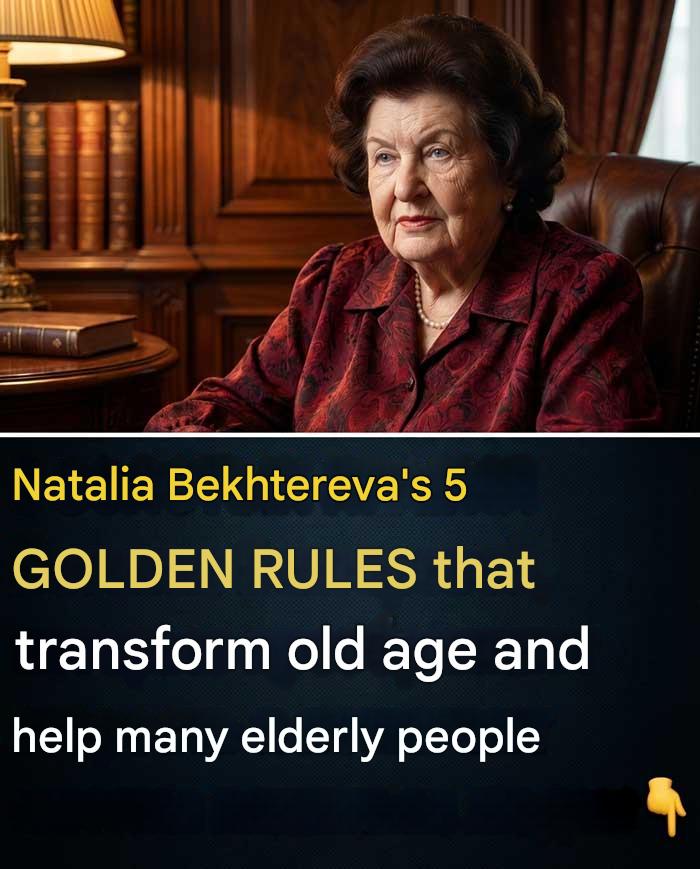
"I won't become a burden": 5 rules from Natalia Bekhtereva that will change old age forever
How to avoid becoming a burden: 5 principles from Natalia Bekhtereva that help maintain dignity and mental clarity in adulthood
As we age, many people begin to experience anxious thoughts: What will happen when my strength wanes? Will I become superfluous in the lives of my loved ones? These questions especially often trouble women over sixty. The phrase "I'm afraid of becoming a burden" doesn't stem from weakness—it conceals deep inner honesty and a fear of losing one's significance.
Even if there are loving people around you who are willing to help, internal experiences—shame, feelings of dependence, and helplessness—can gradually erode your emotional state. This is why it's so important to build an internal foundation early on.
The eminent neurophysiologist Natalia Petrovna Bekhtereva spoke of old age not as a period of decline, but as a time to be lived with dignity, awareness, and a sense of self-worth. Her principles are simple, yet they contain profound practical wisdom, confirmed not only by life experience but also by science. Science
"It is very important to remain needed and to be able to rejoice—even when there seems to be no reason for it."
1. Maintain a sense of being needed
After retirement, life changes. The usual rhythm disappears, responsibilities are reduced, and with that, a feeling of emptiness can come. If before you were constantly expected, asked for advice, needed for help, now it may seem as if your role has diminished.
But it's important to understand: the feeling of being needed is not an external circumstance, but an internal choice. The human brain is designed to work actively as long as there are tasks and meaning. When a person loses engagement, cognitive activity declines, memory deteriorates, and apathy sets in.
Find an area where you can be helpful. It doesn't have to be something large-scale. Helping neighbors, caring for grandchildren, volunteering, sharing experiences—all of these things restore a sense of meaning.
Even one person who cares about you can change your state of mind. When waking up in the morning makes sense, your quality of life changes.
2. Learn to enjoy yourself—consciously and daily
With age, joy ceases to be as bright and spontaneous as in youth. It becomes deeper, quieter, and requires attention. But it is precisely this joy that directly impacts brain health.
Scientific research confirms that positive emotions stimulate the production of dopamine and serotonin—chemicals that support clear thinking, stress resistance, and overall well-being.
It's important not to wait for joy, but to create it yourself. This can be something very simple:
delicious tea in silence;
a walk in the fresh air;
Conversation with a loved one;
Reading or a favorite activity;
Observing nature.
Joy is a skill. The more often you notice the good, the more easily your brain switches from anxiety to calm. This directly impacts your quality of life and even your physical health.
