
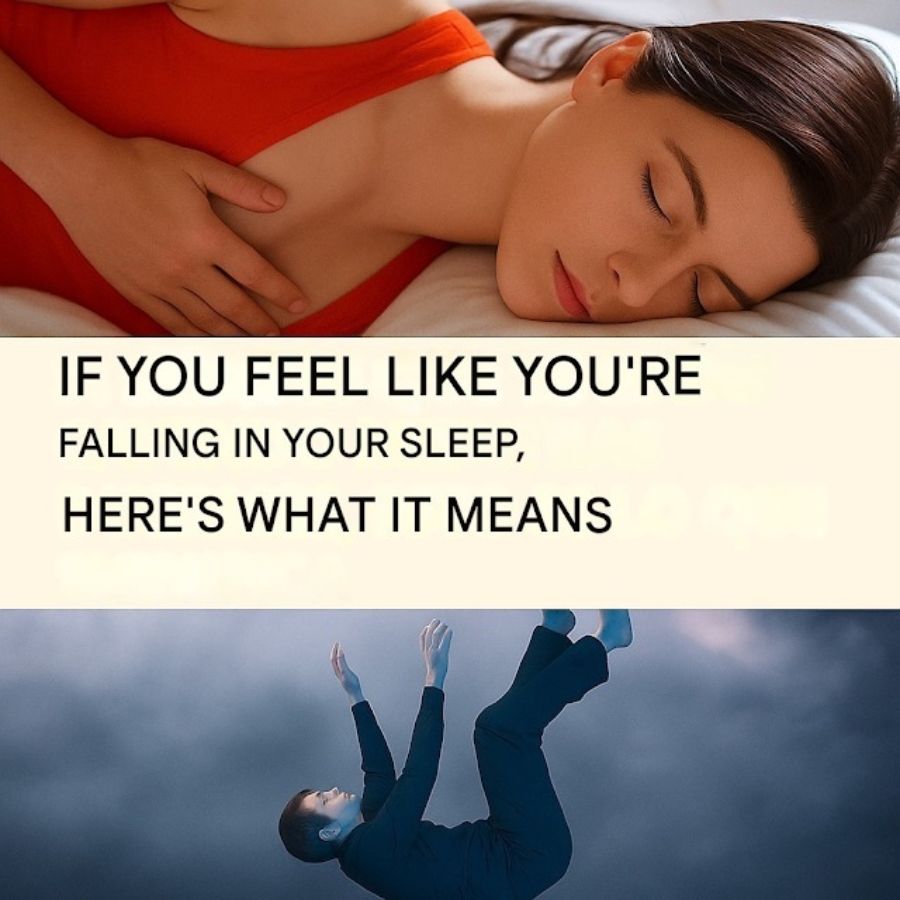
It usually happens right as you’re drifting off.
One moment, you’re lying comfortably in bed, thoughts slowly fading, your body sinking into that soft edge between wakefulness and sleep. Then suddenly—it happens.
A sharp sensation.
A jolt.
It feels like you’re falling.
Your body reacts instantly. A leg kicks, your muscles tense, your heart may even skip. Sometimes you wake up completely. Other times, you barely notice it and just shift positions before drifting off again.
It can feel strange, even unsettling. And if it happens more than once, it’s easy to wonder if something is wrong.
The truth is: this experience is very common, and in most cases, completely harmless. But what causes it is actually a fascinating mix of brain activity, sleep biology, and how your body transitions between consciousness and rest.
Let’s break it down in a simple, clear way.
That “falling” feeling has a name
What you’re experiencing is most likely something called a hypnic jerk (also known as a sleep start).
A hypnic jerk is a sudden, involuntary muscle contraction that happens as you are falling asleep. It often comes with a vivid sensation of falling, tripping, or being startled.
It can involve:
A sudden twitch in the arms or legs
A full-body jolt
A feeling of dropping or losing balance
A brief flash of dream-like imagery (like stumbling or falling)
Even though it feels real, it is not an actual fall. It is a brain-body mismatch happening during the sleep transition.
What’s actually happening in your brain
To understand why this happens, it helps to look at what your brain is doing as you fall asleep.
Sleep is not an instant switch. It is a gradual process where your brain moves through different stages.
As you begin to drift off:
Your breathing slows
Your heart rate decreases
Your muscles start to relax
Your awareness of the environment fades
This transition happens in the brain region that controls sleep and wake cycles.
But sometimes, this shift is not perfectly smooth.
One widely accepted explanation is that your brain misinterprets relaxation signals from your muscles.
As your body relaxes, your brain may think:
