
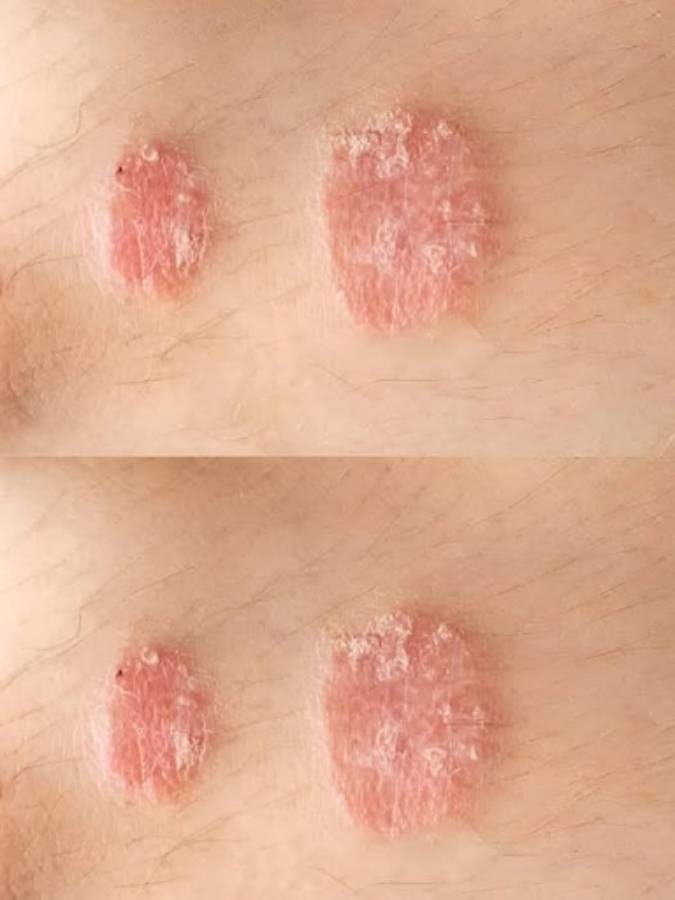
What is psoriasis? (1/10)
Psoriasis is an autoimmune disease that causes chronic inflammation of the skin. In affected individuals, the rate of skin cell turnover is accelerated, from the normal 28 days to just 3 or 4 days. This rapid turnover leads to the appearance of thick, red plaques covered with scales (dead skin) on the skin.
The origin of this disease (2/10)
The origin of this disease is multifactorial. It is primarily due to a genetic predisposition, but environmental factors also play a key role.
What are the causes of psoriasis? (3/10)
Stress, infections, excessive alcohol consumption, or certain medications can trigger or worsen a psoriasis flare-up. However, contrary to some beliefs, psoriasis is not contagious.
© iStock
An incurable but controllable disease (4/10)
There is no cure for psoriasis. However, many treatments can control symptoms and reduce the frequency and severity of flare-ups.
Treatments for psoriasis (5/10)
These treatments vary depending on the severity and location of the disease and may include creams and ointments, systemic medications (tablets or injections), or biological therapies that specifically target certain pathways of inflammation.
