
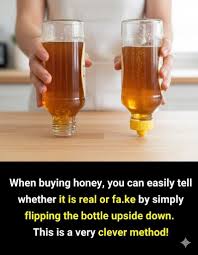
Turn the honey bottle upside down. If it flows slowly, it’s real. If it pours like water, it’s fake.”
It sounds simple. Trustworthy. Almost too good to be true.
And that’s the problem.
While pure honey is thick and slow-moving, the “bottle flip” test is unreliable—and can easily fool you. Temperature, bottle shape, and even added thickeners can trick your eyes.
In fact, many fake honeys are deliberately adulterated with corn syrup, rice syrup, or sugar water—then thickened with gums or gels to mimic real honey’s texture.
So how can you tell what’s real?
In this guide, you’ll discover:
Why the bottle flip test fails (with science)
5 reliable, at-home tests that actually work
What to look for on the label (and what to avoid)
How to buy honey you can trust—every time
Because “liquid gold” should be exactly that—not liquid corn syrup.
Why the “Bottle Flip” Test Is Flawed
It Ignores Temperature
Cold honey (even fake) becomes thick and slow
Warm honey (even real) flows more freely
→ A bottle stored in a warm kitchen may “fail” the test—even if it’s 100% pure
It Doesn’t Detect Clever Adulteration
Food fraudsters know this trick. Many fake honeys contain:
