
Paul wrote:
"Do you not know that your bodies are temples of the Holy Spirit, who is in you, whom you have received from God?" (1 Corinthians 6:19)
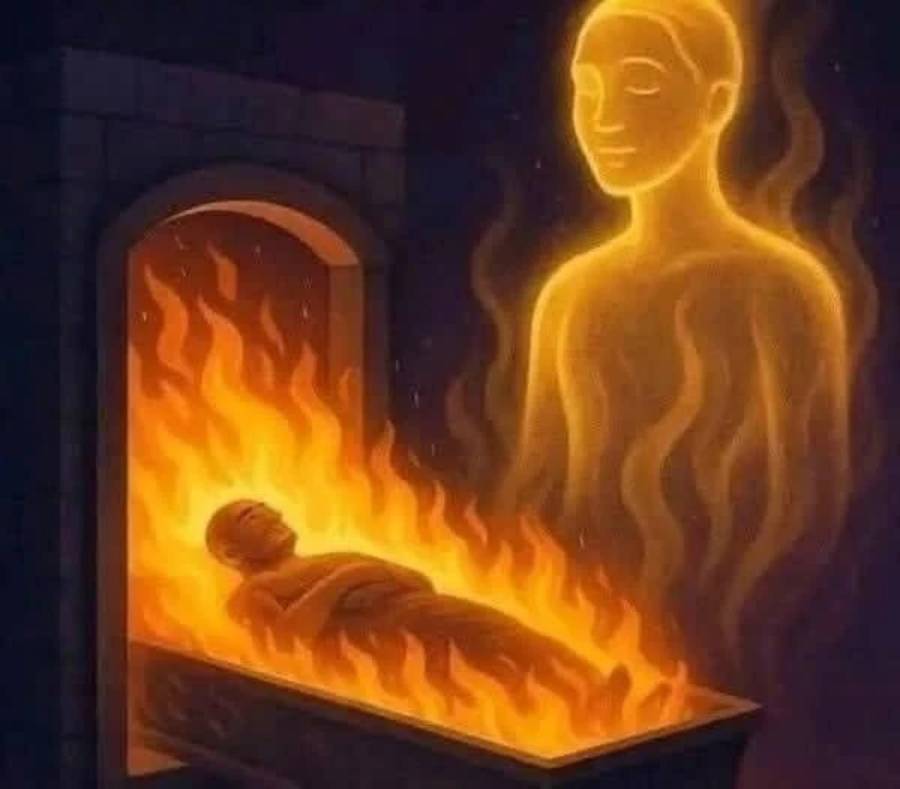
If the body was a temple in life, it deserved respect in death.
2. Distinction from Pagan Practices
Early Christians lived in a Roman world where cremation was common—but it was associated with pagan beliefs about the afterlife. By choosing burial, Christians made a counter-cultural statement about their hope in bodily resurrection.
3. Following Christ's Example
Jesus was buried. For centuries, that was enough. Christians sought to imitate their Lord even in death.
4. The Hope of Resurrection
Burial wasn't just about honoring the body. It was a tangible expression of hope. The body placed in the ground was like a seed waiting for spring—a powerful image of resurrection.
Paul himself used this metaphor:
"What you sow does not come to life unless it dies. And what you sow is not the body that is to be, but a bare kernel... But God gives it a body as he has chosen." (1 Corinthians 15:36-38)
So Is Cremation a Sin?
Most Christian theologians today would answer: no, cremation itself is not a sin.
The key distinction lies in why someone chooses cremation.
When Cremation Is Not a Sin
Practical reasons: Cost, lack of burial space, environmental concerns, or the wishes of the deceased
Cultural context: In some cultures, cremation is the norm and carries no anti-Christian symbolism
Simplicity and humility: A desire for a modest, unpretentious farewell
When Cremation Might Be Problematic
Denial of resurrection: If cremation is chosen because someone believes the body is worthless and will never be raised
Anti-Christian statement: If chosen specifically to reject Christian teaching about the body
Disrespectful handling: Scattering ashes in undignified ways or keeping them in inappropriate places
The Church of England captures this well:
"The Christian faith affirms the resurrection of the body and the life of the world to come. The manner of burial should express this faith. Cremation is not contrary to the Christian faith, but the ashes should be buried or interred in a cemetery or other appropriate place, not scattered or kept at home."
What the Early Church Believed
The early church father Augustine addressed this question directly. He noted that God is powerful enough to raise any body, no matter how it perished—by fire, water, wild animals, or decay. For God, resurrection isn't a problem of logistics. It's a promise of power.
"The sea gave up the dead that were in it, and death and Hades gave up the dead that were in them." (Revelation 20:13)
If God can raise bodies consumed by the sea or eaten by beasts, He can certainly raise bodies reduced to ash.
