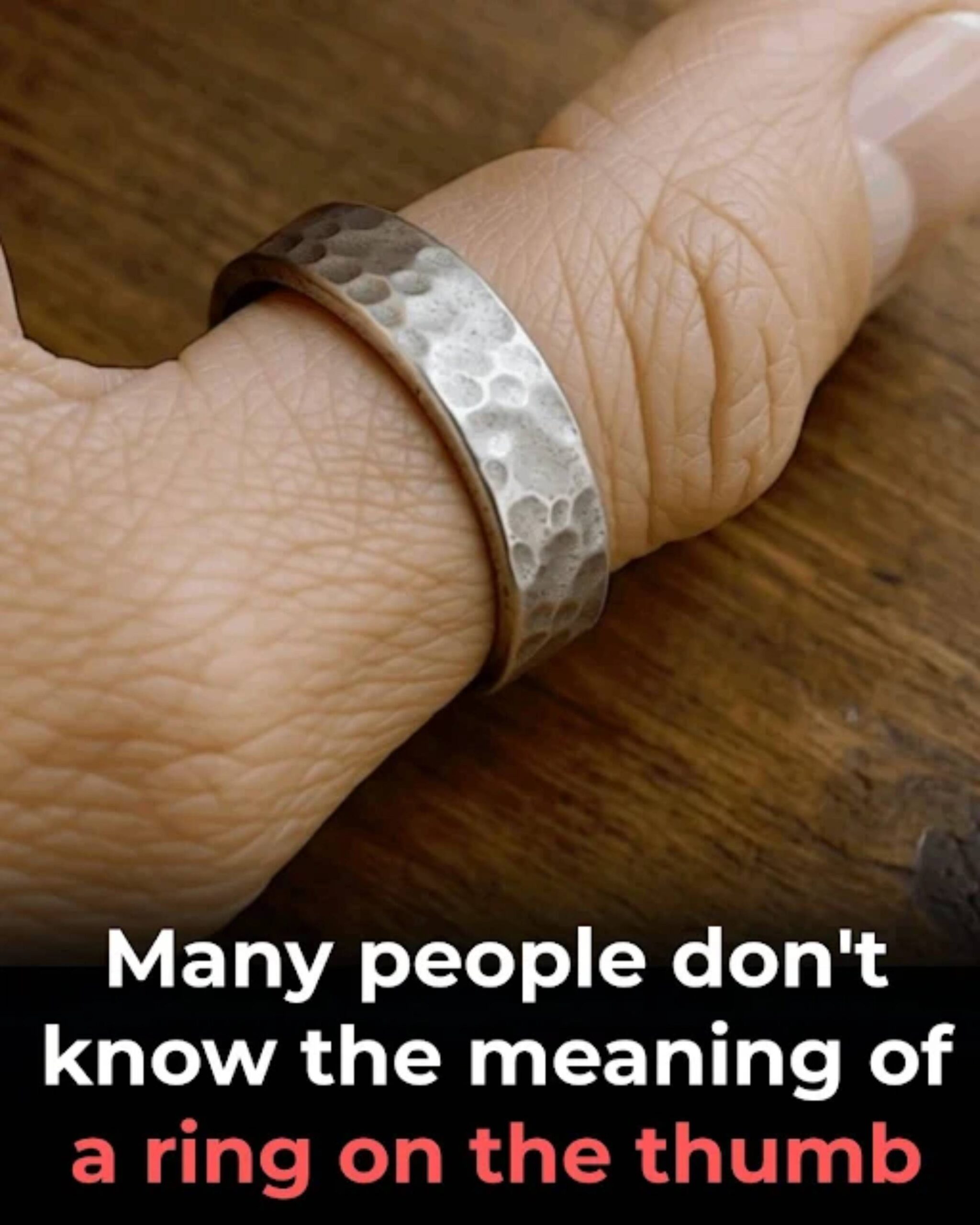
Look down at your hands—the most expressive tools you own. Now, imagine a ring not on the traditional "ring finger," but boldly seated on the thumb. It feels different, doesn't it? Defiant. Independent. There's a reason for that. While rings on other fingers often follow societal scripts (weddings, graduations, family crests), the thumb ring has always danced to its own rhythm. It’s a symbol that has whispered different secrets to women and men throughout history, evolving from a tool of power to a modern badge of identity.
Its meaning isn't dictated by a single culture or era, but woven from a fascinating tapestry of utility, status, rebellion, and personal declaration.
The Historical Anchor: Strength, Status, and the Archer's Aid
Long before it was a fashion statement, the thumb ring was a tool of power and precision.
For Men (The Warrior's Guard): Across ancient empires—from Rome to Persia to China—the thumb ring was primarily masculine armor. It was the archer's ring (a zhī in China, a majra in Persia). Crafted from leather, bone, or jade, it protected the thumb from the savage snap of the bowstring, allowing for a stronger, more accurate release. Wearing one signaled skill, strength, and status as a protector or hunter. Roman senators wore broad gold thumb rings (signet rings) to seal documents, turning the digit into a walking stamp of authority.
For Women (The Rare Sigil of Autonomy): Historically, a woman wearing a thumb ring was a notable exception, and thus deeply significant. In some cultures, it indicated a woman of substantial independent wealth or noble birth, one who operated outside the typical domestic sphere. It was a quiet, undeniable signal of autonomy in a world that granted women little.
The Modern Dialect: Rebellion, Identity, and Fluid Expression
Today, the meanings have dramatically shifted, often blending and transcending gender lines, yet nuanced differences remain in perception.
What a Thumb Ring Often Communicates for Women:
Inner Strength & Independence: It’s widely seen as a symbol of a strong, self-reliant woman. The thumb, separate and opposable, represents willpower and individuality.
A Declaration of Identity: In modern times, it can be a subtle signal within the LGBTQ+ community, particularly a marker of lesbian or queer identity, representing strength and non-conformity to traditional gender norms.
