
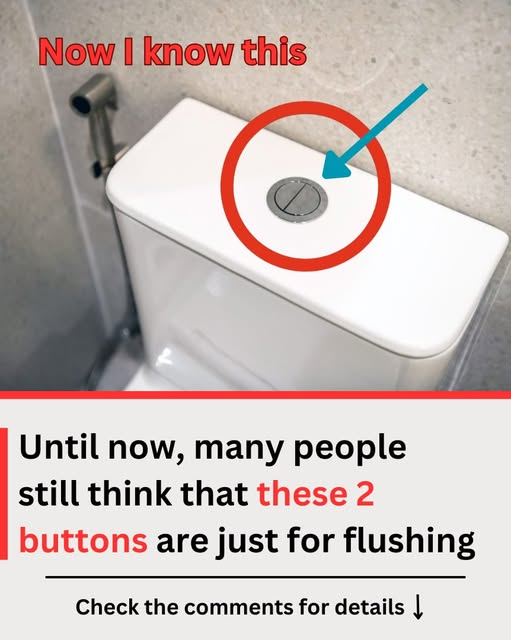
How the Two Buttons Work
Although dual-flush toilets vary slightly by manufacturer, most follow the same basic principle.
The Small Button
The smaller button activates a partial flush.
This flush uses a reduced volume of water—usually around 0.8 to 1.1 gallons. It’s meant for flushing liquid waste, which requires less force and less water to remove from the bowl.
Because liquid waste occurs more frequently than solid waste, this smaller flush can save a significant amount of water throughout the day.
The Large Button
The larger button activates a full flush.
This flush typically uses about 1.6 gallons of water, though modern high-efficiency models may use even less.
The full flush creates stronger water pressure and flow, ensuring solid waste is removed effectively from the bowl and into the plumbing system.
Why Dual-Flush Toilets Matter
At first glance, saving a gallon or two of water per flush might not seem like a big deal. But when multiplied across millions of households and businesses, the impact becomes enormous.
Water Conservation
Freshwater is one of the world’s most valuable natural resources. Many regions already face water shortages due to population growth, climate change, and drought.
Dual-flush toilets help conserve water by reducing unnecessary flushing volume.
A household that switches from an old toilet to a dual-flush model can save thousands of gallons of water every year.
Lower Utility Bills
Using less water doesn’t just help the environment—it also helps your wallet.
Because dual-flush toilets reduce the amount of water used per flush, households often see lower monthly water bills. Over the lifetime of the toilet, these savings can be significant.
Reduced Strain on Plumbing Systems
Using less water per flush also reduces the strain on municipal wastewater systems. This can lead to improved efficiency in water treatment plants and lower infrastructure costs for cities.
Why Some People Use the Buttons Incorrectly
Despite their advantages, many people still use dual-flush toilets incorrectly. Some users press both buttons at the same time, while others always choose the large button out of habit.
This usually happens because people simply don’t know what the buttons are for.
In some cases, toilets include symbols—such as a small droplet and a large droplet—to indicate which flush is which. However, not everyone recognizes these icons.
Learning the correct use of each button ensures the toilet functions as intended.
Dual-Flush Toilets Around the World
Dual-flush toilets are particularly common in countries that prioritize environmental conservation.
Countries like:
Australia
Japan
Germany
Sweden
Singapore
have adopted water-saving plumbing technologies widely.
Australia, in particular, was an early adopter of dual-flush toilets due to frequent drought conditions. Today, dual-flush systems are standard in most Australian homes.
