
Is It a Hidden Feature?
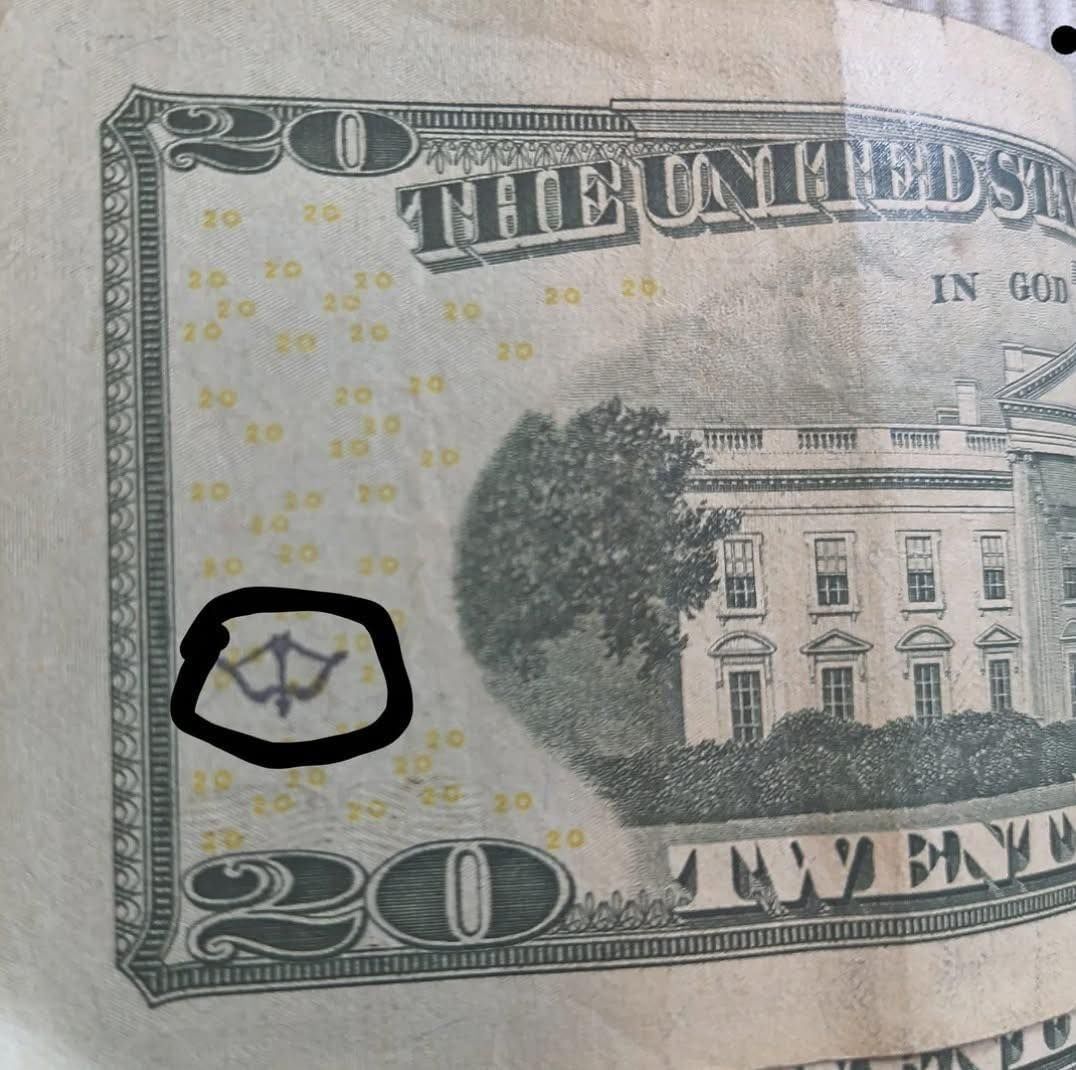
Despite what many online posts suggest, the mark is not a security feature. Official security elements on U.S. currency are well documented and carefully designed. These include watermarks, security threads, color-shifting ink, microprinting, and raised textures that can be felt by touch.
The bow-and-arrow-like shape does not appear on any list of official security features. It does not serve a protective function, and it is not meant to be recognized or verified.
It is simply an incidental result of printing.
Does It Make the Bill Special?
Another common question is whether a bill with this mark is worth more money. The short answer is no.
Collectors are interested in major, verifiable printing errors. These include missing layers of ink, severe misalignments, inverted backs, or other dramatic flaws that clearly differ from standard bills. Small ink artifacts or minor marks do not qualify as collectible errors.
A bill with this mark remains legal tender. It can be spent normally and holds no additional value beyond its face amount.
Yet, the fascination persists.
Why the Story Keeps Spreading
So why do people continue to believe there is something hidden or symbolic about this mark?
Part of the answer lies in how information spreads today. Images circulate quickly online, often without context. A close-up photo paired with a dramatic question can travel far faster than a careful explanation.
Money itself also plays a role. Currency feels important. It represents value, power, and trust. When something unusual appears on it, people naturally assume it must mean something.
Add curiosity, mystery, and a bit of imagination, and a simple printing imperfection can easily turn into a viral story.
But the truth remains grounded in reality, not secrecy.
When you step back and view the issue calmly, the idea of hidden symbols on everyday currency becomes less convincing. The U.S. dollar has been studied, analyzed, and documented more than almost any other object in circulation. Its design history is well recorded, and its security features are publicly explained.
If there were secret symbols embedded into the design, they would not have remained hidden for long.
The Difference Between Design and Coincidence
Design involves intention. Every line, color, and feature added to a banknote is planned, tested, and approved. Coincidence, on the other hand, happens naturally when materials, machines, and processes interact in unpredictable ways.
The bow-and-arrow-like shape falls firmly into the second category.
It does not appear consistently on all bills. It does not appear in the same location every time. It does not follow a pattern that would suggest purpose. These facts alone strongly indicate that it is not part of the design.
Why Small Imperfections Stand Out
Ironically, modern currency design makes these marks more noticeable. Advanced printing techniques create dense, layered backgrounds filled with micro-details. When something slightly different appears within that complexity, it draws attention.
In simpler designs, the same mark might go completely unnoticed. On a modern bill, it becomes a focal point simply because it contrasts with the surrounding pattern.
This contrast invites interpretation.
The Appeal of Hidden Meanings
Humans love stories. We enjoy uncovering secrets and believing we have discovered something others have missed. The idea that everyday money might contain hidden messages is exciting. It makes ordinary objects feel special.
But excitement does not equal truth.
Most of the time, reality is less dramatic and more practical. That does not make it less interesting. In fact, understanding how currency is produced and how perception works can be just as fascinating as any mystery.
What This Teaches Us
This small detail on a dollar bill is a reminder of two things. First, no manufacturing process is perfect, even one as advanced as currency printing. Second, our minds are incredibly skilled at finding meaning, even when none was intended.
When these two facts come together, myths are born.
Rather than seeing the mark as a secret symbol, it can be appreciated as a glimpse into the complexity of modern printing and the psychology of human perception.
Final Reflection
The bow-and-arrow shape seen on some U.S. bills is not a message, a code, or a deliberate design element. It is a minor printing artifact, shaped by chance and highlighted by our tendency to recognize patterns.
Sometimes, mystery is not created by design. It is created by coincidence and imagination working together.
And in a strange way, that makes even a simple dollar bill more interesting—not because it hides secrets, but because it reflects how we see the world.
