
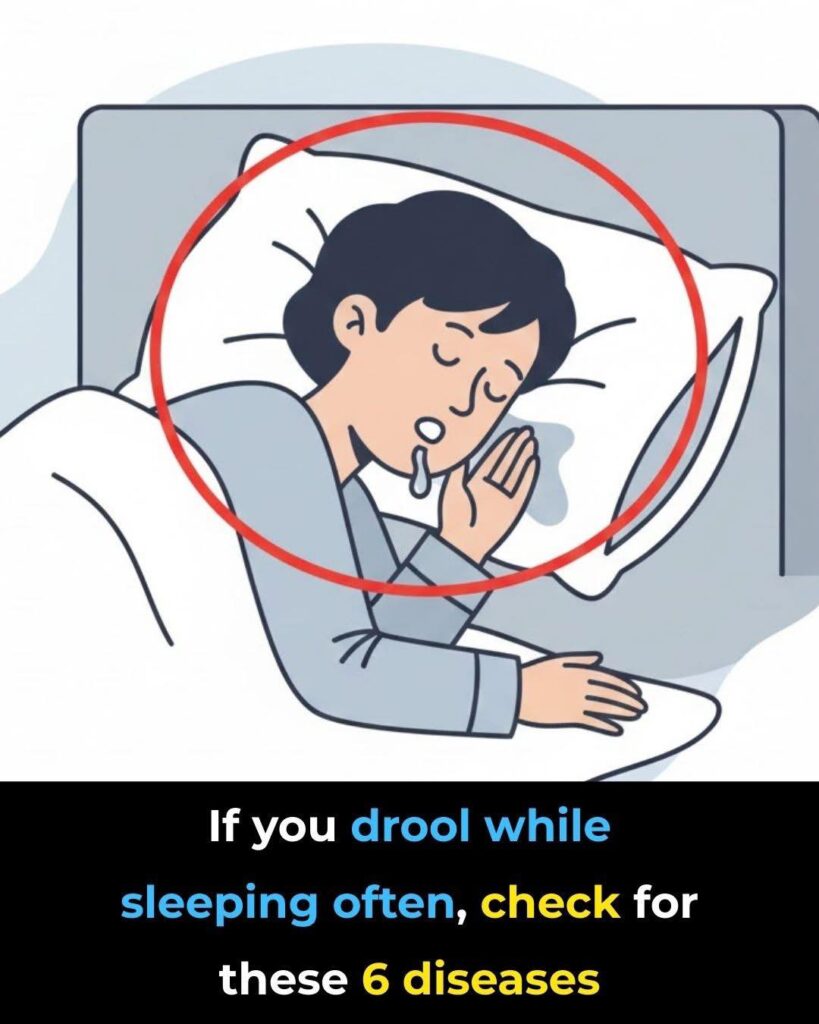
Below are six common health-related factors that may contribute to drooling while sleeping.
1. Sleep Position
Sleeping on your side or stomach makes it easier for saliva to escape the mouth due to gravity. When muscles relax during deep sleep, the mouth may open slightly, allowing saliva to flow out. This is the most common and least concerning cause of nighttime drooling.
What helps: Try sleeping on your back with proper neck support.
2. Nasal Congestion or Breathing Issues
Blocked nasal passages from allergies, colds, sinus infections, or a deviated septum can force you to breathe through your mouth while sleeping. Mouth breathing increases saliva loss and makes drooling more likely.
What helps: Treat nasal congestion, use a humidifier, or rinse nasal passages with saline.
3. Acid Reflux (GERD)
Gastroesophageal reflux disease can stimulate excess saliva production, especially at night. Acid rising into the esophagus triggers the body to produce more saliva as a protective response, which may lead to drooling during sleep.
What helps: Avoid late meals, reduce acidic or spicy foods, and elevate the head of the bed.
4. Oral or Dental Problems
Dental issues such as gum disease, tooth infections, or poorly fitting dental appliances can increase saliva production. Inflammation inside the mouth may also make it harder to swallow saliva during sleep.
