
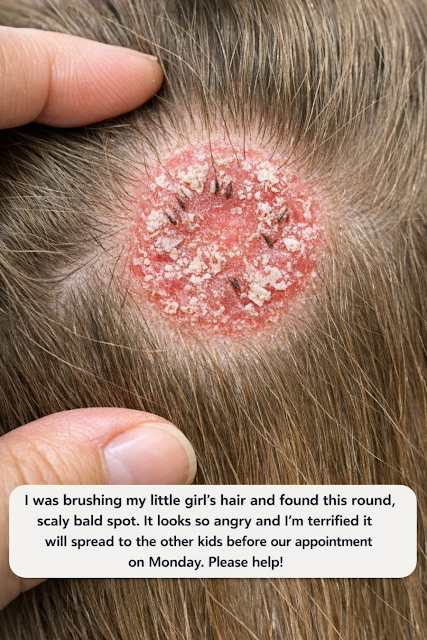
Typical Signs of Tinea Capitis
Children with this condition often develop symptoms such as:
Round bald patches on the scalp
Red, scaly, or flaky skin in the affected area
Broken hair shafts near the scalp
Itching or tenderness
Swollen lymph nodes in the neck in some cases
The bald patch may look dry or scaly, and sometimes the hairs in the area appear broken or stubbly rather than completely gone.
Why Parents Worry About It Spreading
Parents often panic when they hear that scalp ringworm is contagious—and with good reason. Fungal infections can spread through direct contact or by sharing personal items.
Common ways it spreads include:
Sharing hairbrushes or combs
Using the same hats or helmets
Contact with infected pets
Skin-to-skin contact during play
Because children often play closely together and share items, infections can sometimes move quickly between siblings or classmates if precautions are not taken.
Other Conditions That Can Cause Bald Patches
Although fungal infections are common, they are not the only possible explanation. Doctors will usually consider several possibilities when evaluating a child with a bald spot.
Alopecia Areata
Another potential cause is Alopecia areata, an autoimmune condition where the body’s immune system mistakenly attacks hair follicles.
Unlike fungal infections, alopecia areata usually produces smooth, completely bald patches without scaling or redness. The skin often looks normal and healthy.
Hair may grow back on its own, though some children experience repeated episodes.
Scalp Psoriasis
In some cases, a scaly patch could be linked to Psoriasis, a chronic inflammatory skin condition.
Psoriasis on the scalp can cause:
Thick, scaly plaques
Red patches
Flaking skin similar to dandruff
Temporary hair thinning
However, psoriasis patches usually appear in multiple areas and may extend beyond the hairline.
Trichotillomania (Hair Pulling)
Another possibility is Trichotillomania, a condition where a child repeatedly pulls out their own hair, often due to stress or anxiety.
In these cases, the hair loss tends to look uneven, with hairs of different lengths rather than a perfectly round patch.
What Parents Should Do Before the Doctor’s Appointment
Waiting several days for a pediatric appointment can feel stressful, especially when there are other children in the home. While it’s important not to panic, there are several simple steps parents can take to reduce the risk of spreading a possible infection.
1. Avoid Sharing Hair Items
Do not allow children to share:
Brushes
Hair ties
Hats
Pillows
These items can carry fungal spores if an infection is present.
2. Wash Bedding and Towels
Wash items that touch the scalp regularly, including:
Pillowcases
Towels
Hats
Use warm or hot water if possible.
3. Keep the Area Clean
Gently wash the scalp using a mild shampoo. Avoid harsh scrubbing, which may irritate the skin further.
