
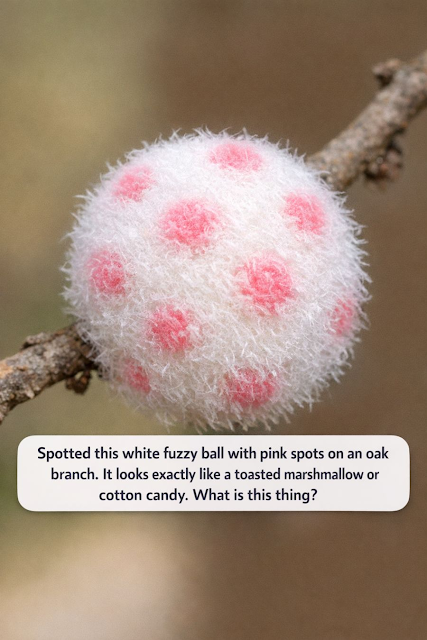
The pink spots may come from:
Pigments produced by the plant tissue
Aging or drying of the gall
Colonization by harmless microbes
Natural coloration related to the gall species
To someone seeing it for the first time, the object can look so unusual that it almost seems artificial.
What’s Happening Inside the Fuzzy Ball
Although the outside may look soft and harmless, there is typically a tiny ecosystem developing inside the gall.
Within the structure:
A larva (baby wasp) is growing.
The surrounding plant tissue provides nutrients.
The gall protects the larva from predators and harsh weather.
As the larva grows, it eventually transforms into an adult insect. Once mature, the tiny wasp chews its way out of the gall and flies away to continue its life cycle.
Often, by the time people notice these galls, the insect inside has already left.
Why Oak Trees Produce These Growths
You might wonder why a tree would allow an insect to manipulate its tissue like this.
The answer is that the tree isn’t willingly cooperating—it’s being chemically influenced. The wasp’s egg-laying process introduces compounds that alter the normal growth pattern of the plant cells.
Instead of forming leaves or bark, the plant tissue grows into the gall structure.
From the tree’s perspective, this is a kind of controlled abnormal growth. However, most oak trees are strong enough that a small number of galls doesn’t cause serious damage.
Are Oak Galls Harmful to Trees?
In most cases, oak galls are harmless or only mildly harmful.
A healthy oak tree can support hundreds or even thousands of galls without experiencing major problems. The tree simply continues growing around them.
However, extremely large infestations may sometimes:
Slow growth slightly
Cause cosmetic damage to leaves or twigs
Lead to premature leaf drop in severe cases
Even then, trees usually recover easily.
For homeowners or gardeners, the presence of a few galls is generally nothing to worry about.
Why Some Galls Look Like Cotton Candy
The cotton-like appearance of some galls is caused by fine hair-like structures growing from the plant tissue. These structures are called trichomes, and they are similar to the tiny hairs that appear on many plants.
