
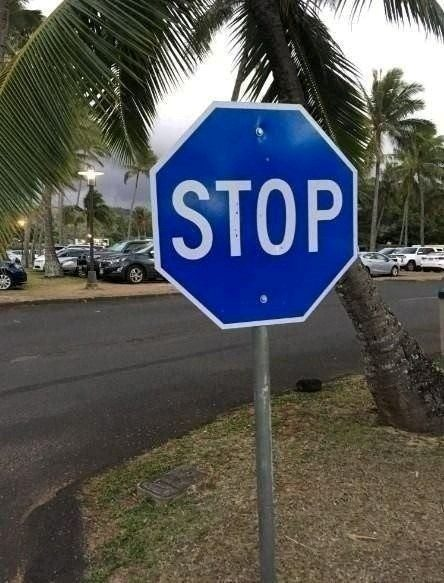
The Meaning Behind a Blue Stop Sign: Unraveling the Mystery
Road signs are designed to be universal. Whether you’re driving through a bustling city or a quiet rural road, their colors, shapes, and symbols are meant to communicate instantly and clearly. Among all traffic signs, the red stop sign stands as one of the most recognizable symbols in the world. Its bold color and distinct octagonal shape are ingrained in the minds of drivers everywhere.
But what happens when that familiar sign appears in an unfamiliar color? Imagine approaching an intersection and seeing a stop sign that is blue instead of red. It immediately raises questions: Is it official? Does it mean something different? Should you stop—or not?
This unusual sight has puzzled many drivers and sparked curiosity online. Let’s explore the mystery behind blue stop signs, what they really mean, and how to interpret them safely.
Why Stop Signs Are Red
To understand the significance of a blue stop sign, it helps to first understand why stop signs are traditionally red. The color red has long been associated with danger, caution, and urgency. In traffic systems around the world, red signals a need for immediate attention and action—specifically, to stop.
The standard red stop sign, with its white lettering and octagonal shape, is part of a globally recognized system designed to minimize confusion. In many countries, traffic authorities follow strict guidelines to ensure consistency in road signage. This consistency is crucial because drivers often rely on split-second decisions.
Any deviation from this standard, such as a blue stop sign, stands out precisely because it breaks these expectations.
Are Blue Stop Signs Official?
In most countries, including those that follow international road conventions, a blue stop sign is not an official traffic control device. Regulatory stop signs must adhere to specific design standards, including color, shape, and size.
If you encounter a blue stop sign on a public road, it is highly likely that it is not authorized by transportation authorities. This means it may not carry the same legal requirement as a standard red stop sign. However, that does not mean it should be ignored entirely.
Common Places You Might See a Blue Stop Sign
Although they are not officially recognized, blue stop signs do appear in certain contexts. Understanding where and why they are used can help clarify their purpose.
